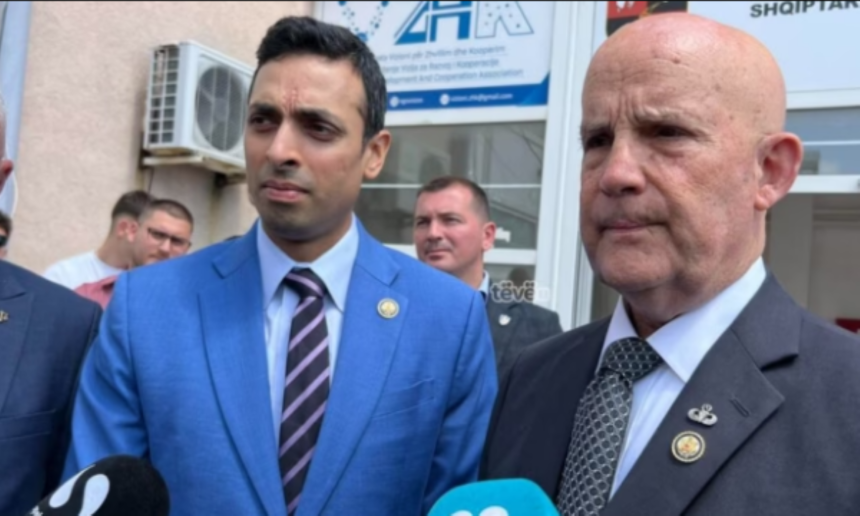
Wrapping up a critical morning session in the Preševo Valley, US Congressman Keith Self (R-TX) confirmed to reporters that Washington recognizes “real, systemic problems” affecting the ethnic Albanian minority within Serbia.
The bipartisan delegation, which includes Congressman Suhas Subramanyam (D-VA), underscored that their multi-nation fact-finding tour is deliberately structured to cross-examine minority rights on both sides of the volatile border.
Dual-Lens Fact-Finding Mission
Speaking directly to journalists on the steps of the Albanian National Council, Congressman Self emphasized that the delegation’s itinerary is meticulously balanced to evaluate compliance with international human rights standards by both Belgrade and Pristina.
            [US CONGRESSIONAL COMPLIANCE PARITY]
                             │
       ┌─────────────────────┴─────────────────────┐
       ▼                                           ▼
MONITORING SERBIA (Preševo):               MONITORING KOSOVO (Pristina):
• Evaluating state discrimination          • Evaluating the integration and
  against the ethnic Albanian minority.      security of the ethnic Serb minority.
Congressman Keith Self on the Border Friction: “We have seen that there are real problems between the Albanians and Serbia, just as we knew before coming. However, our next step is to travel directly into Kosovo to learn comprehensively about the situation of the Serbian minority there. We are visiting both jurisdictions to deeply understand how minorities are treated and what their rights look like in practice.”
Education, Underdevelopment, and Address “Passivization”
Congressman Suhas Subramanyam expanded on the specific legal and structural violations documented during their closed-door testimony with local mayors and civil society leaders. Subramanyam explicitly called out institutional inequalities orchestrated by Belgrade:
- Educational Barriers: Severe restrictions on importing contemporary Albanian-language textbooks and the prolonged refusal by Serbian authorities to recognize university diplomas issued by Pristina institutions.
- Economic Disinvestment: Chronic, uneven budget allocations that leave Albanian-majority municipalities in southern Serbia with dilapidated infrastructure compared to neighboring Serbian-majority districts.
- The Passivization Crisis: The delegation spent significant time reviewing the administrative “passivization” (wiping out) of residential addresses, a bureaucratic tactic local leaders say is used to strip ethnic Albanians of their residency status, IDs, and voting rights.
Kamberi: “Double Standards Must End”
Shaip Kamberi, the sole ethnic Albanian representative in the National Assembly of Serbia, hailed the high-profile American presence as a vital international spotlight on a frozen human rights crisis.
                    [THE MINORITY PARITY ARGUMENT]
                                  │
                                  ▼
 ┌─────────────────────────────────────────────────────────────┐
 │ SERBIA'S DEMAND: Maximum autonomy for Serbs inside Kosovo   │
 ├─────────────────────────────────────────────────────────────┤
 │ KOSOVO'S DEMAND: Reciprocal rights for Albanians inside     │
 │ Serbia (Preševo Valley)                                      │
 ├─────────────────────────────────────────────────────────────┤
 │ THE STATUS QUO: Belgrade demands rights abroad while        │
 │ stripping rights domestically through "passivization"        │
 └─────────────────────────────────────────────────────────────┘
Kamberi emphasized that Belgrade cannot legally or morally demand robust self-governing associations and advanced protections for ethnic Serbs inside Kosovo while simultaneously deploying administrative tools to disenfranchise native Albanian communities within its own borders. “The era of structural discrimination and flagrant double standards toward the Albanians of the Valley must come to an end,” Kamberi stated.
Following the press briefing, the congressional motorcade departed Preševo, heading toward the border checkpoint to begin their scheduled security and minority-rights reviews with state officials in Pristina.