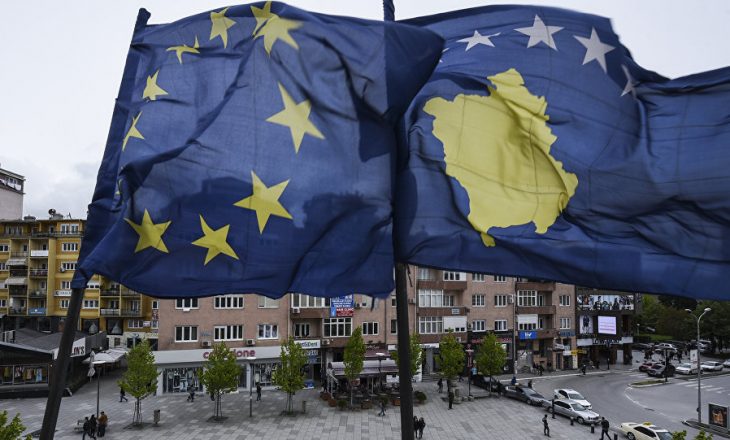
PRISTINA — In a race against time, Kosovo’s caretaker government has officially submitted its implementation report to the European Commission, detailing the status of its mandatory reform steps under the European Union’s €6 billion Growth Plan for the Western Balkans.
The submission arrived on the final deadline, July 15, 2026, for reforms scheduled to be implemented by June 30.
The European Commission’s evaluation of this report will officially determine how much of the allocated funding Kosovo will secure and how much is permanently lost. Current estimates from Pristina suggest that Kosovo is set to lose over €40 million due to failed legislative targets.
Why €40 Million is Hanging in the Balance
The financial setback is a direct consequence of a prolonged domestic political crisis, ongoing electoral cycles, and a lack of political consensus, which left the Assembly of Kosovo gridlocked and unable to pass critical laws.
Out of 13 crucial reform steps that had an extended grace period until June 30, 7 were successfully implemented, while 6 failed to materialize.
“For steps that have not been completed within the additional deadline, the dedicated funds are lost. Out of the 13 steps that had an additional deadline of June 30, seven are considered implemented, while six have not been fully completed… The cost is estimated to be over 40 million euros.”
— Jeton Zulfaj, Kosovo’s Chief Negotiator and Reform Coordinator
The Six Failed Reforms Costing Kosovo Millions
According to coordinator Jeton Zulfaj, five of the six failed reform steps depended entirely on the Assembly passing legislation, while the final one was halted due to the limitations of a caretaker government:
- Energy & Electricity Laws: Along with their essential secondary legislation.
- State Aid & Control System: The Law on State Aid and the establishment of the State Aid Control System.
- Innovation & Entrepreneurship: The Law on Innovation, including the National Innovation Council and the Innovation Fund.
- Bankruptcy Framework: Legislation regarding insolvency/bankruptcy and the Law on Late Payments.
- Judicial Reform Package: A vital bundle of six laws, including those on the Kosovo Prosecutorial Council (KPK), Judicial Council (KGJK), the Academy of Justice, and integrity checks.
- Organized Crime Strategy: The Strategy for Combating Organized Crime, which a caretaker government did not have the procedural mandate to approve.
The Bigger Picture: What is Still at Stake?
Under the 2024–2027 Western Balkans Growth Plan, Kosovo is eligible for a total of €882 million (€253 million in grants and €629 million in low-interest loans).
| Stage / Fund Status | Amount | Description |
| Pre-financing (Received) | €62 million | 7% of the total allocation, disbursed after the initial ratification. |
| At Risk (June Deadline) | ~€40.8 million | Funds tied to the 6 unfulfilled legislative and strategic reforms. |
| Upcoming (December Deadline) | ~€165.9 million | Tied to another 27 reform steps scheduled for the end of 2026. |
What Happens Next?
European Commission Spokesperson Guillaume Mercier confirmed that Brussels is now entering the evaluation phase. While the missed deadlines typically mean a permanent loss of those specific funds, the Commission will analyze all reports submitted by Western Balkan nations before making a final decision on whether any funds can potentially be reallocated.
The pressure is now on Kosovo’s political factions to resolve internal blockades, as failing to meet the next major milestone in December 2026 could result in the loss of hundreds of millions of euros.