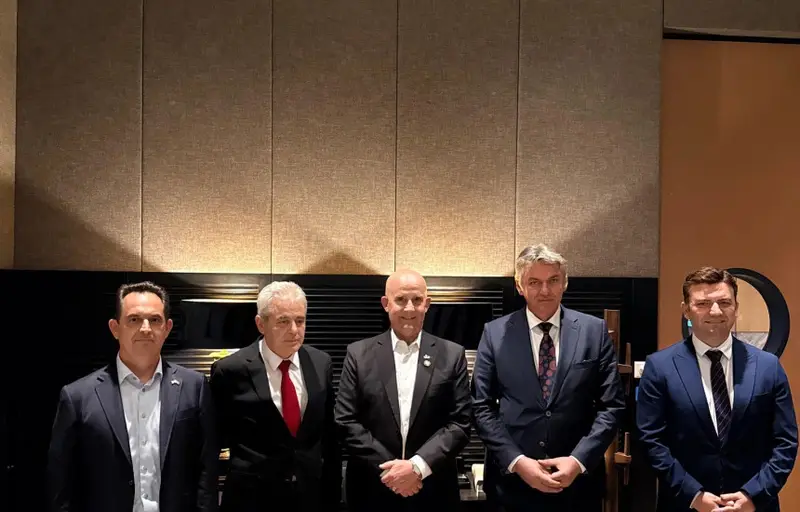
During an official visit to North Macedonia, US Congressman Keith Self emphasized the critical importance of maintaining regional stability, upholding democratic rights, and fully implementing the Ohrid Framework Agreement. Self highlighted these elements as vital guarantees for long-term peaceful coexistence in both the country and the broader Western Balkans.
The visit, coordinated alongside the “Albanians for America” organization, included separate high-level meetings with representatives of the Albanian Student Movement and key leaders of the ethnic Albanian political opposition.
Student Leaders Voice Concerns Over Language Rights
In his meeting with Albanian Student Movement representatives Mevlan Ademi, Besar Sejdiu, and Jon Selimi, Congressman Self was briefed on growing concerns regarding systemic challenges to minority rights.
The student leaders specifically highlighted:
- The Law on the Use of Languages: Delays and obstacles in the comprehensive enforcement of existing language laws.
- Constitutional Equality: Perceived political shifts threatening the institutional progress made by the ethnic Albanian community.
- Academic Testing Barriers: Recent student protests in Skopje demanding that the state jurisprudence (bar) exam be administered in the Albanian language alongside Macedonian.
The student representatives stressed that protecting the Albanian language and maintaining guaranteed institutional representation are fundamental to the spirit of coexistence established over two decades ago.
Engagement with Political Opposition Leaders
Congressman Self also held talks with prominent figures of the Albanian opposition in North Macedonia, including Ali Ahmeti, head of the Democratic Union for Integration (DUI), and Zijadin Sela, leader of the Albanian Alliance.
The discussions focused on the current political climate, inter-ethnic dynamics, and the necessity of adhering to democratic standards that secure institutional representation. Self reiterated that the United States views the Ohrid Agreement as a foundational pillar for peace, urging all political factions to respect established multi-ethnic frameworks.
Context: The Legacy of the Ohrid Agreement
The Ohrid Framework Agreement was signed in 2001, effectively ending an armed conflict between ethnic Albanian insurgents and Macedonian security forces. The conflict was largely driven by demands for equitable representation, the use of national symbols, and official status for the Albanian language.
The peace accord resulted in 15 constitutional amendments that reshaped the country’s social fabric:
| Key Provision | Statutory Threshold | Current Demographic Reality (2022 Census) |
| Official Language Status | Any language spoken by over 20% of the population holds official status alongside Macedonian. | Ethnic Albanians account for 29% of the total population of approximately 2 million. |
| Ethnic Demographics | N/A | Macedonians: 54% Albanians: 29% Other Communities: 17% |
The legal thresholds established by the accord allowed for the systemic integration of Albanians and other minority groups into public administration, law enforcement, and parliament.
Prior to his arrival in Skopje, Congressman Self completed working visits to Kosovo and the Preševo Valley in southern Serbia, assessing regional security and minority rights frameworks across the Western Balkans.