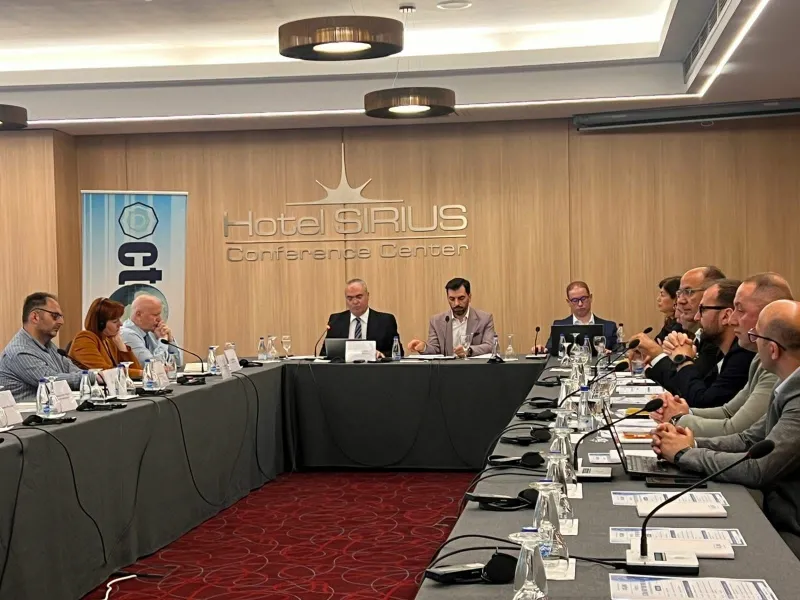
Ahead of the upcoming June 7 elections, local and international security analysts have issued a sharp warning regarding the high probability of sophisticated foreign interference in Kosovo’s democratic processes. The alert was delivered during the “Octopus” Institute’s 2026 Forum, titled “Electoral Integrity in the Face of Hybrid Threats: Security Implications of Foreign Interference.”
Top intelligence, security, and electoral experts gathered to map out the active disinformation networks and asymmetric pressures coordinated by Belgrade and Moscow aimed at destabilizing the region and undermining public trust in Kosovo’s state institutions.
The Architecture of the Electoral Threat
Arben Fetoshi, Director of the “Octopus” Institute for Hybrid War Studies, opened the forum by emphasizing that neutralizing Serbian interference in Kosovo’s elections is no longer just a domestic administrative chore—it is a critical necessity for broader Balkan stability.
Recent political disruptions across Europe have demonstrated the severe real-world consequences of unchecked hybrid operations.
[Foreign Hybrid Interference Framework]
  Strategic Intent: Undermine Democratic Institutions & Regional Stability
       │
       ├──► 1. Political Coercion (Targeting non-regime Serb candidates)
       ├──► 2. Digital Disinformation (Deploying localized anti-state narratives)
       └──► 3. Tactical Alignment (Deploying Kremlin-tested hybrid methodologies)
Inside the Strategy: Coercion, Fake Narratives, and Russian Blueprints
The panel highlighted three primary vectors through which foreign actors are actively attempting to compromise the integrity of the June 7 vote:
1. Institutional Sabotage and Intimidation in the North
Valdete Daka, the former head of Kosovo’s Central Election Commission (CEC), detailed a long history of aggressive, targeted interference orchestrated by Belgrade, particularly within the northern municipalities. Daka highlighted the severe undemocratic pressures applied to local Serb politicians who refuse to align with the Belgrade-backed Lista Srpska.
“Anyone who has attempted to represent the Serbian community outside of Lista Srpska has been punished in various ways, including arbitrary dismissals from their jobs,” Daka revealed.
2. The Digital Disinformation Toolkit
Festim Rizanaj, an open-source intelligence expert from Hibrid.info, mapped out the dominant deceptive narratives currently flooding the digital sphere. These coordinated information campaigns, primarily pushed in the Serbian language, have successfully permeated local digital networks and AI-driven algorithmic feeds. The core narratives focus on manufactured claims of:
- “Institutional Terror” and “Political Arrests” conducted by Pristina authorities.
- Systemic Election Manipulation to preemptively invalidate democratic outcomes.
- Malicious Disparagement of Diaspora Votes, painting external ballots as illegitimate tools used to skew final tallies.
3. The Russo-Serbian Strategic Synchronicity
Dr. Iryna Synelnyk, an international expert on asymmetric warfare, provided a detailed breakdown of the long-term geopolitical alliance between Moscow and Belgrade. Synelnyk warned that Russia’s global playbook for breaking democracies via information manipulation has been completely shared with Serbian intelligence. Tageblatt and local monitors note there is a remarkably high probability that Serbia will deploy these exact Kremlin-tested methodologies on June 7 to disrupt voter turnout and fracture institutional credibility.
State Mobilization: Preemptive Security Countermeasures
In response to these multi-layered threats, Kosovo’s law enforcement agencies are shifting to an active, defensive posture. Vwllaznim Sordolli, representing the Kosovo Police, confirmed that law enforcement has initiated localized operational plans specifically tailored to counter hybrid interference.
Specialized police investigators and state prosecutors are already deployed on the ground in high-risk zones well ahead of voting day. This enables rapid, real-time responses to physical intimidation at polling stations, illegal financing, or any clandestine efforts to compromise the balloting process.
Experts concluded that alongside tactical security deployments, the state must aggressively expand public awareness campaigns to build societal resilience against weaponized digital media.