In a major escalation of the ongoing global trade war, China’s Ministry of Commerce announced sweeping economic sanctions against 10 US defense and technology corporations today, Monday, June 22, 2026.
The aggressive counter-measures were launched in direct retaliation for a recent decision by the US Pentagon to ban several flagship Chinese technology giants from participating in lucrative American defense contracts.
The Export Ban: Cutting Off Dual-Use Supplies
Under the new mandates issued by Beijing, all Chinese domestic enterprises are immediately prohibited from exporting “dual-use” products and technologies to the blacklisted American firms. Dual-use items refer to commercial components, software, or raw materials that can be repurposed for military manufacturing.
                    BEIJING'S COUNTER-SANCTIONS MATRIX

   THE US RESTRICTION (PENTAGON)                  THE CHINESE REACTION (MOFCOM)
 ──────────────────────────────────────        ──────────────────────────────────────
 • Blacklists Alibaba and Baidu,               • Restricts "dual-use" exports to
   alleging links to China's military.           10 targeted US defense & tech firms.
 • Bans targeted Chinese firms from            • Blocks all state entities from buying
   securing any US defense contracts.            goods from 46 major US corporations.
The export ban specifically targets American companies involved in the production of military drones, advanced maritime surveillance, and rare earth mineral extraction. Beijing justified the embargo as a necessary measure to protect China’s national security against what it termed Washington’s “unjust expansion of the so-called Chinese Military Companies List.”
The Target List: The 10 Sanctioned US Firms
According to the official decree, the 10 American companies hit with the strict dual-use export embargo include:
- AVEOX (Simi Valley, California)
- Red Cat Holdings (South Salt Lake, Utah)
- Teal Drones (South Salt Lake, Utah)
- IMSAR (Springville, Utah)
- Jaia Robotics (Bristol, Rhode Island)
- Ball Aerospace & Technologies (Broomfield, Colorado)
- Oshkosh Defense (Oshkosh, Wisconsin)
- L3Harris Maritime Services (Norfolk, Virginia)
- MP Materials (Las Vegas, Nevada)
- USA Rare Earth (Stillwater, Oklahoma)
Geopolitical experts note that while some of these entities rely heavily on global supply chains for specialized electronics, the actual financial impact within China may be limited.
“Most of these corporations are deeply embedded in the US defense industrial complex or maintain tight contractual ties to the American government. Because these specific firms do not conduct active commercial business operations inside China, the immediate impact of the export ban will likely remain symbolic.”
— George Chen, Greater China Partner at The Asia Group
Broadening the Scope: 46 Corporations Blocked from State Procurement
In a separate but coordinated move, China’s Ministry of Finance delivered a more substantial economic blow by ordering all state-owned enterprises, ministries, and public institutions to cease purchasing any products from 46 prominent US corporations.
While the brief financial directive did not outline specific legal triggers, the sweeping blacklist includes major corporate entities and core operational subsidiaries of US defense titans Lockheed Martin, Raytheon (RTX), and General Dynamics.
The Catalyst: Trump’s Pentagon Targets Alibaba and Baidu
The sudden tit-for-tat economic warfare was triggered earlier this month when the US Department of Defense expanded its restrictive list to include major Chinese commercial tech conglomerates, including e-commerce giant Alibaba and search engine pioneer Baidu, claiming they are deeply integrated with the People’s Liberation Army (PLA). Baidu immediately fired back, labeling the US allegations “completely baseless.”
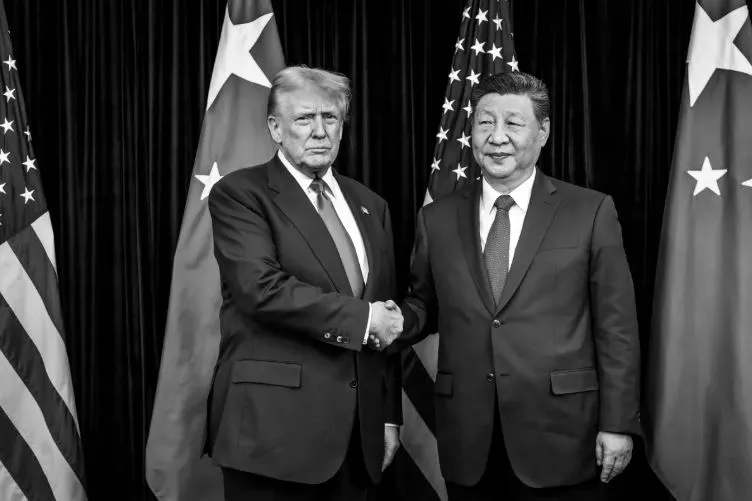
The Chinese Ministry of Commerce emphasized that Washington’s aggressive sanctions directly violate the fundamental diplomatic understandings reached between Chinese President Xi Jinping and US President Donald Trump during Trump’s high-profile state visit to Beijing in May.