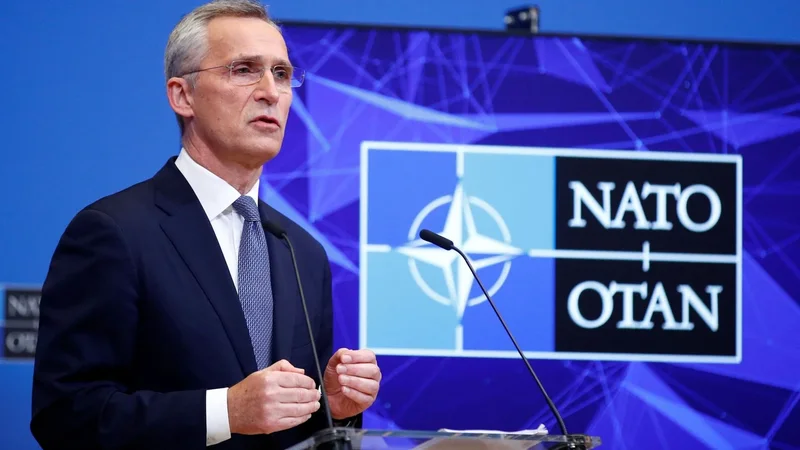
Speaking just days before the highly anticipated NATO Summit in Ankara, Norwegian Finance Minister and former NATO Secretary-General Jens Stoltenberg issued a strong defense of the transatlantic alliance, arguing that Washington remains fundamentally dependent on its European allies for its own national security.
In an exclusive interview with the German newspaper Die Welt, Stoltenberg acknowledged that severe political fractures exist between the United States and Europe but emphasized that the alliance remains resilient enough to weather the storms.
Managing the Trump-Era Transatlantic Friction
The upcoming summit—scheduled for July 7–8, 2026, at the Beştepe Presidential Compound in Turkey—comes during a period of acute strain. U.S. President Donald Trump has repeatedly ramped up his public criticisms of European defense expenditures and broken with traditional allies on trade, climate policies, and global security arrangements.
Stoltenberg did not shy away from addressing these deep diplomatic rifts:
Jens Stoltenberg: “Of course, there are serious differences of opinion between the U.S. and Europe on trade, climate, and security issues. I do not underestimate these challenges. But it is in the absolute national security interest of the United States to have a strong NATO. The defense of the U.S. begins at the European-Russian border.”
The Prescription: Higher European Defense Budgets
The central friction heading into Ankara is defense burden-sharing. Under a landmark agreement established at last year’s summit in The Hague, NATO allies committed to a staggering 5% GDP defense investment target by 2035 to address expanding full-spectrum threats.
                       [Transatlantic Security Architecture]
                                         │
        ┌────────────────────────────────┴────────────────────────────────┐
        ▼                                                                 ▼
[The United States]                                             [European NATO Allies]
Provides nuclear umbrella and core                              Accelerating spending to meet the
global power projection.                                        5% GDP target to anchor U.S. commitment.
Stoltenberg noted that the most effective way for European capitals to insulate the alliance from shifting political winds in Washington is to prove they are willing to foot the bill. “The most important thing Europe can do to maintain the transatlantic alliance and secure the commitment of the U.S. under President Trump is to invest more,” he added.
High Stakes on the Ankara Agenda
The upcoming summit in Turkey represents a critical operational juncture for the 32-member alliance as it tries to reset relations with Washington:
| Summit Core Priority | Operational Target | Underlying Strategic Challenge |
| Fairer Burden-Sharing | Deepening the 5% GDP defense commitment | Addressing hard-line U.S. demands regarding European defense industrial capacities. |
| Support for Ukraine | Delivery of advanced hardware and long-term funding | Reaffirming absolute collective solidarity against ongoing Russian aggression. |
| Transatlantic Re-alignment | Resolving diplomatic gridlocks | Navigating sudden disputes over U.S. regional policy and global force positioning. |
Despite ongoing friction, Stoltenberg remains confident that collective defense obligations will triumph over political disagreements, concluding that a strong NATO remains a vital asset for both sides of the Atlantic.