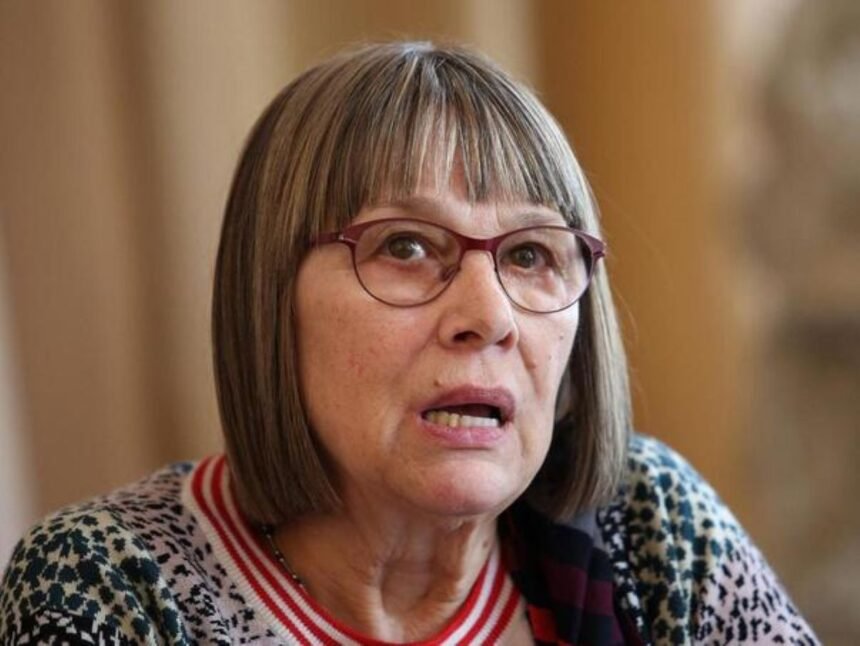
Prominent human rights activist and founder of the Humanitarian Law Center, Nataša Kandić, has strongly condemned recent statements made by Serbian Government Minister Snežana Paunović, calling them highly alarming.
In an interview with Gazeta Express, Kandić emphasized that not even former Yugoslav President Slobodan Milošević had publicly advocated for the ethnic cleansing of Kosovo as an official political objective back in 1998.
Key Takeaways from Nataša Kandić’s Interview
- A New Level of Extremism: Kandić pointed out that under heavy international pressure in 1998, Milošević made concessions—such as reducing military presence and allowing some displaced civilians to return. In contrast, Paunović’s recent remarks imply that conditions for completing ethnic cleansing were simply “more favorable” in 1998 than in 1999.
- The “Unspoken” State Policy: Kandić believes that Paunović was specifically appointed to her ministerial post to publicly voice what others in the Serbian government think but prefer not to say openly: presenting ethnic cleansing as a “legitimate political solution.”
- A History of Known Crimes: As a native of Peja (Peć), Paunović is well aware of the local atrocities committed by Serbian forces. Kandić recalled the mass deportation of almost the entire Albanian population from Peja on March 27, 1999, alongside notorious massacres in nearby villages.
Sectors of Memory: Specific War Crimes in the Peja Region
Kandić highlighted that the minister is fully aware of the documented crimes committed against civilians in key locations where victims were killed and their bodies burned:
                      [ War Crimes in the Peja Region ]
                                      |
         +-----------------+----------+----------+-----------------+
         |                 |                     |                 |
         v                 v                     v                 v
    [ Qyshk ]          [ Pavlan ]            [ Zahaq ]        [ Lubeniq ]
A Message of Unabandoned Wartime Ideology
Kandić expressed deep concern over the lack of political accountability and empathy for the victims and their families, particularly regarding the unresolved issue of missing persons:
“The fate of missing persons, the suffering of their families… and the continued hiding of information about mass graves clearly do not trouble Minister Paunović. Her statement shows that, for her, the human consequences of war are not a reason for compassion, but an opportunity to justify the very policy that produced them.” — Nataša Kandić, Human Rights Activist
She concluded by stating that she does not expect the Serbian Prime Minister to dismiss Paunović. Instead, Kandić fears that this stance is not just an isolated personal opinion, but a sentiment that enjoys quiet consensus at the highest levels of the Serbian government.