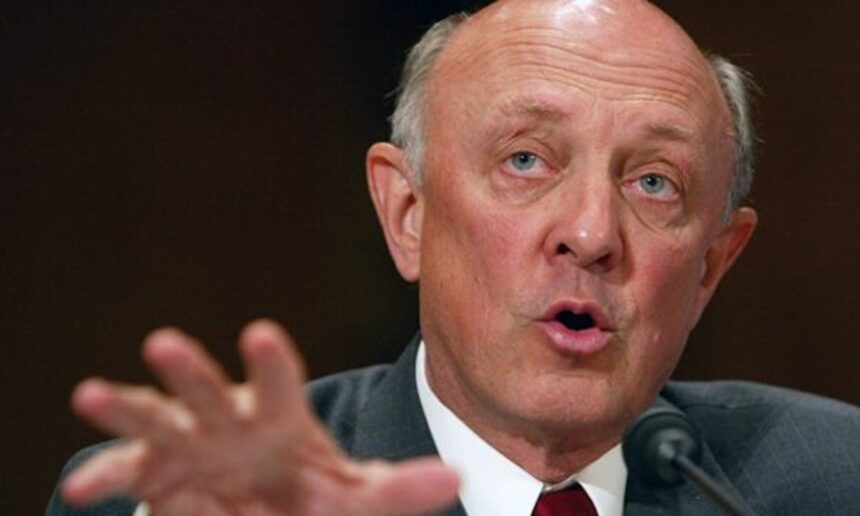
Former CIA Director James R. Woolsey has died at the age of 84 at his home in Washington, D.C., after suffering a stroke, his wife, Conchita Sarnoff Woolsey, confirmed.
She said his health had deteriorated in recent years due to the so-called “Havana Syndrome,” a mysterious medical condition reported by U.S. diplomats and other government officials since 2016. Symptoms have included headaches, balance problems, sleep disturbances, and difficulty concentrating, according to The Washington Post.
Woolsey served as Director of the Central Intelligence Agency (CIA) from 1993 to 1995 during President Bill Clinton’s first term, a period marked by major geopolitical changes following the end of the Cold War. His tenure was also overshadowed by the Aldrich Ames espionage scandal. Ames admitted to spying for the Soviet Union and later Russia for years, receiving approximately $2.5 million from Moscow in exchange for U.S. state secrets before his arrest in 1994.
Woolsey faced criticism for not taking harsher action against senior officials responsible for overseeing Ames. However, he argued that excessively strict security measures could foster an atmosphere of paranoia and false accusations, further damaging morale within the agency.
Following the Cold War, Woolsey also came under pressure from Congress to significantly reduce the CIA’s budget as the U.S. intelligence community adapted to a changing global security environment.
Before leading the CIA, Woolsey served as Under Secretary of the Navy during President Jimmy Carter’s administration and advised both Republican and Democratic administrations on arms control policy.
In 1989, President George H. W. Bush appointed him as the chief U.S. negotiator in NATO–Warsaw Pact arms reduction talks, which ultimately led to the 1990 Treaty on Conventional Armed Forces in Europe (CFE Treaty).
James Woolsey was born on September 21, 1941, in Tulsa, Oklahoma. He graduated from Stanford University, studied law at Yale University as a Rhodes Scholar, and began his public service career in 1970 at the U.S. National Security Council. He later served as legal counsel to the U.S. Senate Armed Services Committee and practiced law in Washington, D.C., between government appointments.