Based on an analysis by Michael Martens published in Frankfurter Allgemeine Zeitung (FAZ)
The wartime history of Serbian President Aleksandar Vučić has once again become the subject of international discussion following an analysis by German journalist Michael Martens in Frankfurter Allgemeine Zeitung. The article revisits Vučić’s own statements from the 1990s about his involvement as a young volunteer during the Bosnian War and examines the political environment in which he built his early career.
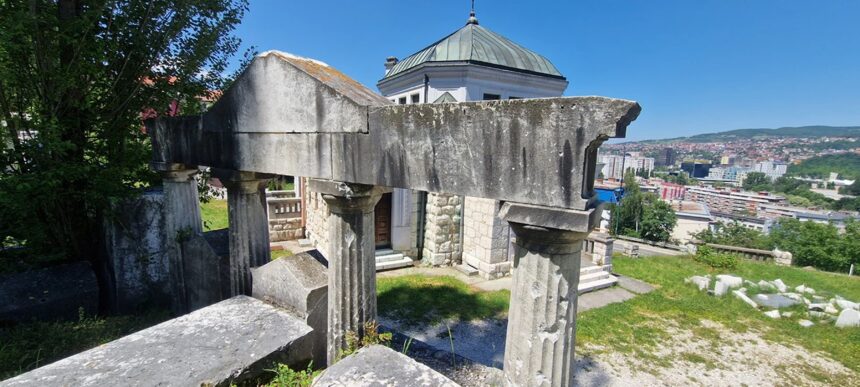
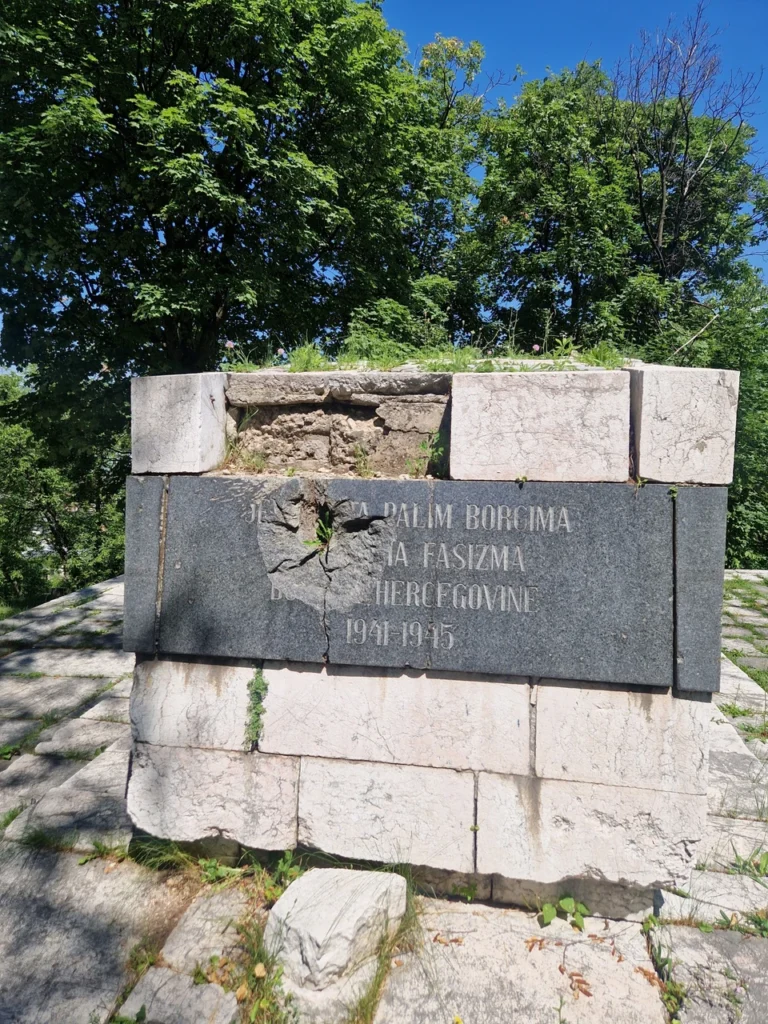
The focus of the report is Vučić’s reported presence in Sarajevo during the city’s brutal siege, particularly his connection to the Jewish Cemetery of Sarajevo, a location that became one of the strategic positions held by Bosnian Serb forces during the conflict.
The cemetery, which dates back centuries and once represented the history of Sarajevo’s Sephardic Jewish community, became a symbol of the destruction that followed the breakup of Yugoslavia. A place that had preserved memories of coexistence and cultural diversity became, during the 1990s war, one of the locations from which the city below was targeted.
Sarajevo: A city under siege
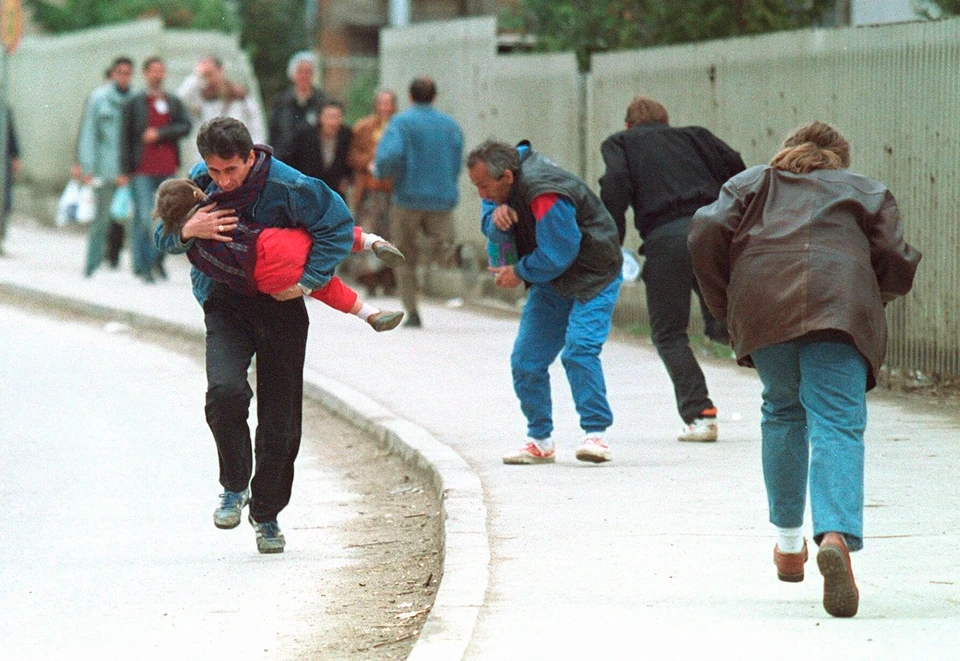
Between 1992 and 1996, Sarajevo endured one of the longest sieges in modern European history. For 1,425 days, the Bosnian capital was surrounded by Bosnian Serb forces led militarily by General Ratko Mladić, who was later convicted by the International Criminal Tribunal for the former Yugoslavia (ICTY) and sentenced to life imprisonment for genocide, crimes against humanity, and war crimes.
The city was subjected to daily shelling and sniper attacks. Civilians were killed while searching for water, buying food, attending school, or simply moving through the streets. More than 11,000 people lost their lives during the siege.
According to Martens’ analysis, the Jewish Cemetery was among the locations used by Serbian forces because of its elevated position overlooking parts of Sarajevo. The position allowed snipers and artillery units to target areas of the city below.
International witnesses, including former UN officials, later described the cemetery area as one of the dangerous points from which attacks on Sarajevo were carried out.
Vučić’s own accounts from the 1990s
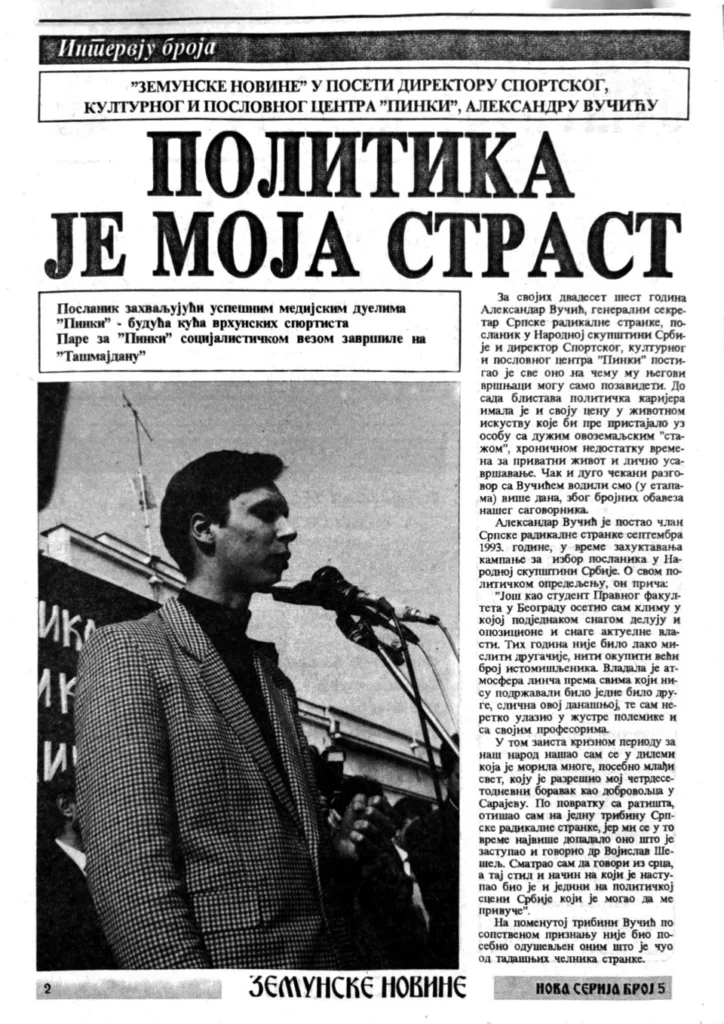
The article highlights that information about Vučić’s wartime involvement did not originate only from his political opponents. According to Martens, Vučić himself spoke about his time as a volunteer in interviews published during the 1990s.
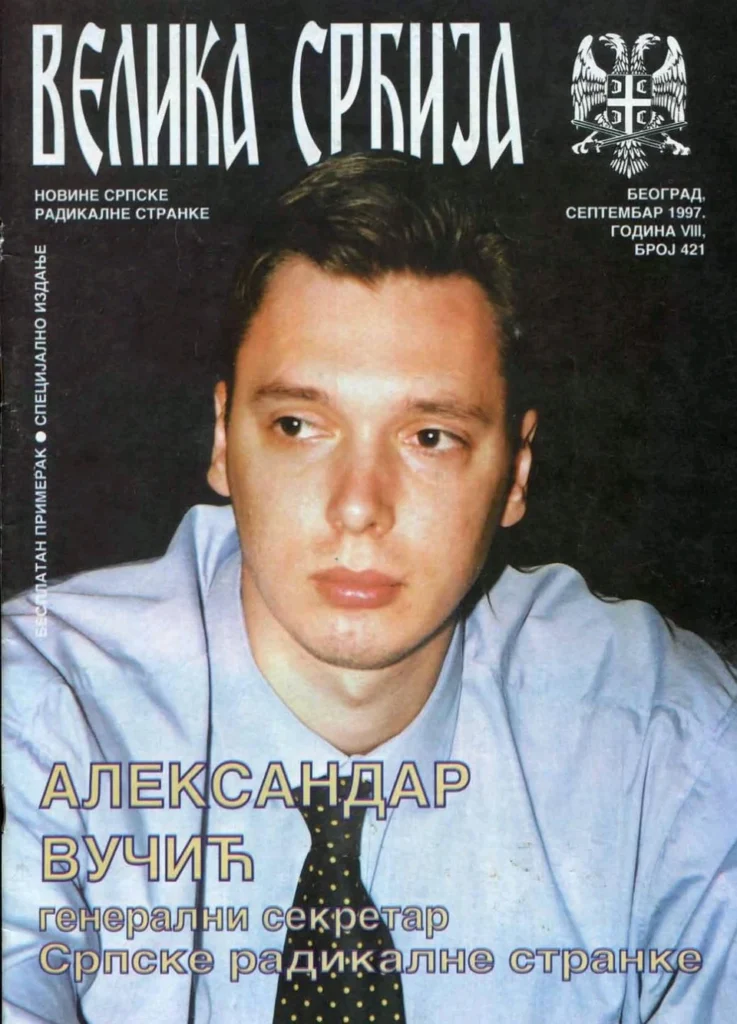
At the time, Vučić was a young politician rising within the Serbian Radical Party (SRS), led by nationalist politician Vojislav Šešelj.
In interviews from that period, Vučić described traveling to Sarajevo during the war and said he volunteered “to defend Serbian identity.” He presented his involvement as part of a broader nationalist cause promoted by the Serbian Radical Party.
The article explains that during the 1990s, the party advocated the creation of a Greater Serbia, a political project aimed at uniting territories with significant Serbian populations into one state. The ideology was closely associated with the conflicts in Croatia and Bosnia and was linked to policies that resulted in ethnic expulsions and widespread crimes against civilians.
Šešelj was later convicted by the ICTY for crimes against humanity.
The unanswered questions about the Jewish Cemetery
One of the central questions raised by Martens concerns what exactly Vučić was doing during his time in Sarajevo.
The report notes that Vučić publicly acknowledged spending time in the Jewish Cemetery area before later moving to Pale, the wartime political center of the Bosnian Serb leadership.
However, the article emphasizes that there is no publicly available evidence proving that Vučić personally participated in killings, sniper attacks, or crimes against civilians during the siege.
The issue raised is instead about his decision, as a young man and aspiring politician, to join and support a nationalist movement whose military and political leadership later became associated with some of the worst crimes committed during the Yugoslav wars.
From radical nationalist politics to the Serbian presidency
Martens also examines the transformation of Vučić’s political image over the decades.
During the 1990s, Vučić was known as a close associate of Šešelj and held positions within the Serbian Radical Party. His public statements at the time reflected strong nationalist views, including support for Serbian territorial claims in Bosnia and Croatia.
After the Dayton Peace Agreement ended the Bosnian War in 1995, Vučić criticized the agreement, considering it unfavorable to Serbian interests.
In later years, however, Vučić changed his political direction. After leaving the Radical Party and helping create the Serbian Progressive Party, he moved toward a more moderate international image. As president of Serbia, he has repeatedly presented himself as a leader committed to European integration, regional stability, and cooperation.
Despite this transformation, critics continue to question how much of the nationalist ideology of the 1990s has truly disappeared from Serbian politics.
The legacy of the Yugoslav wars
The article argues that the unresolved legacy of the Balkan wars continues to influence politics in the region. The relationship between historical memory, nationalism, and political power remains one of the most sensitive issues in the Western Balkans.
For many victims of the Bosnian War, questions about accountability and responsibility remain deeply personal. For Serbia, the debate over figures who were politically active during the 1990s remains a difficult part of confronting the past.
Martens’ analysis raises broader questions about how societies deal with political leaders whose careers began during periods of conflict and radical nationalism:
Can a politician completely separate himself from the ideology and movements that shaped his early career? And how should societies evaluate leaders whose past actions and statements continue to influence public debate decades later?