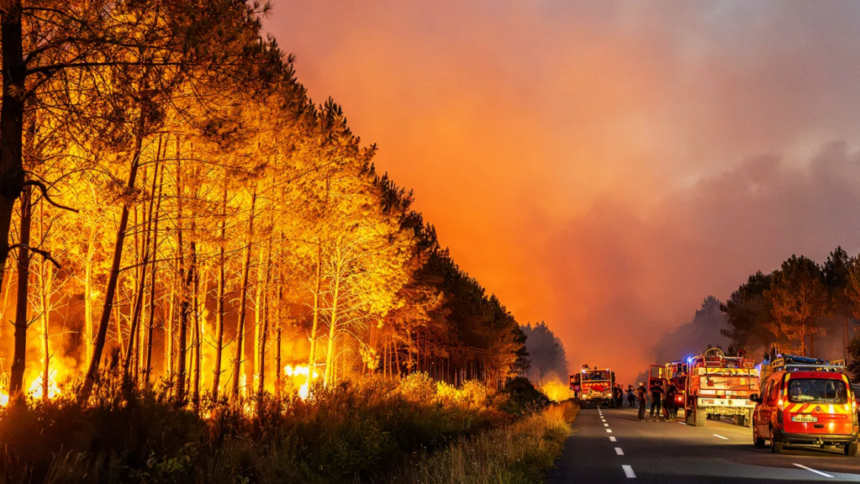
Europe is facing one of its worst wildfire seasons in recent years, as extreme heat and strong winds continue to fuel massive blazes across France, Spain and Italy, forcing around 330,000 people to evacuate over the past week.
In France, authorities ordered the evacuation of nearly 4,000 tourists from campsites and holiday accommodations near the coastal resort of Lacanau, west of Bordeaux, as advancing flames threatened residential and tourist areas.
French President Emmanuel Macron described the crisis as “the most difficult since World War II,” warning that emergency services face challenging weeks ahead.
Officials said wildfires in the Gironde department have already destroyed approximately 42,000 hectares of forest. Although firefighters have partially contained the blaze, authorities remain concerned that soaring temperatures and strong winds could reignite the fires.
Spain continues to battle a critical wildfire emergency as well. A woman who was seriously injured in the Almería wildfires died in hospital, bringing the death toll from that fire to 14. The country is also experiencing its fourth major heatwave of the summer.
Spanish Prime Minister Pedro Sánchez acknowledged that difficult hours still lie ahead but said emergency crews have begun to make progress in containing the fires.
One of the largest wildfires in Spain’s history continues to burn in the mountainous province of Ávila, where approximately 50,000 hectares have been consumed. Firefighters have shifted their strategy from direct firefighting to prioritizing evacuations and protecting homes, citing the fire’s extreme intensity.
The European Union has deployed firefighting aircraft and helicopters to support operations in both France and Spain as the crisis escalates across southern Europe.
European officials have warned that wildfire conditions could persist until early November, raising concerns that 2026 could become one of the most destructive years on record for burned land across the continent.
Climate experts continue to link the worsening wildfire season to climate change, while estimates suggest that this summer’s prolonged heatwaves across Europe have already contributed to at least 10,000 deaths.