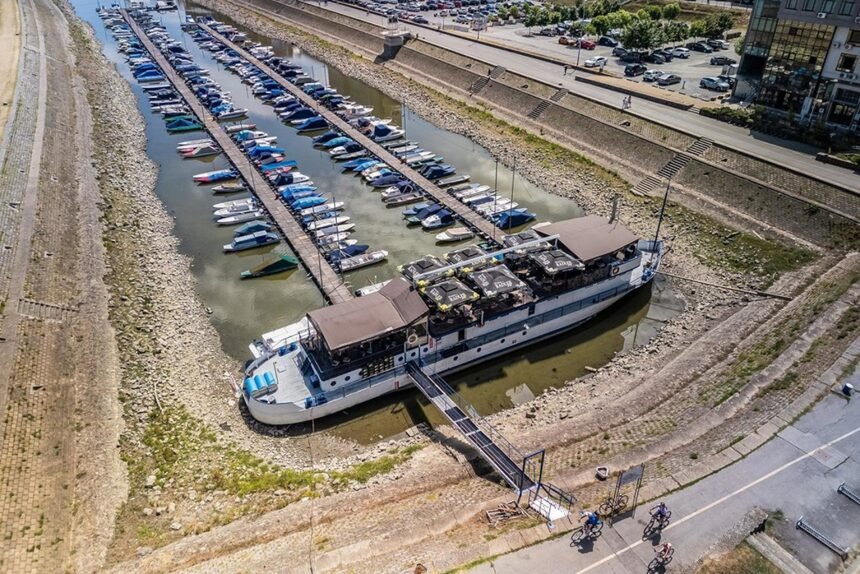
The Drava River near the Croatian city of Osijek has reached its lowest water level since measurements began, raising concerns over the consequences of prolonged drought conditions across the region.
According to hydrological data, the river level has dropped to -186 centimeters, breaking the previous record set only a few weeks ago. Aerial footage shows the exposed riverbed, expanded sandy banks, and sections of the river that have become inaccessible to navigation.
In the Osijek area, several vessels have been stranded near the shore, while in some locations, remains of sunken boats have become visible due to the dramatic drop in water levels.
Hydrological authorities reported that although water levels have slightly increased after reaching the historic low, the Drava remains in a critical low-water state.
Experts say one of the main causes is the lack of rainfall and the reduced snow reserves in the Alps, which normally supply the river during spring and early summer. High temperatures have also contributed to increased evaporation and worsening drought conditions.
A similar situation has been recorded on the Danube River, where record-low water levels have been measured near Batina.
Meteorologists warn that a new heatwave is expected to hit Croatia, with temperatures potentially reaching 40°C, increasing the risk that river levels will remain dangerously low in the coming days.
Experts caution that droughts of this scale are becoming more frequent and that climate change is increasingly affecting Europe’s water resources.