The European Union will transfer €1.4 billion in profits generated by immobilized Russian central bank assets to Ukraine, the European Commission announced Wednesday, as Kyiv faces renewed pressure from intensified Russian air attacks.
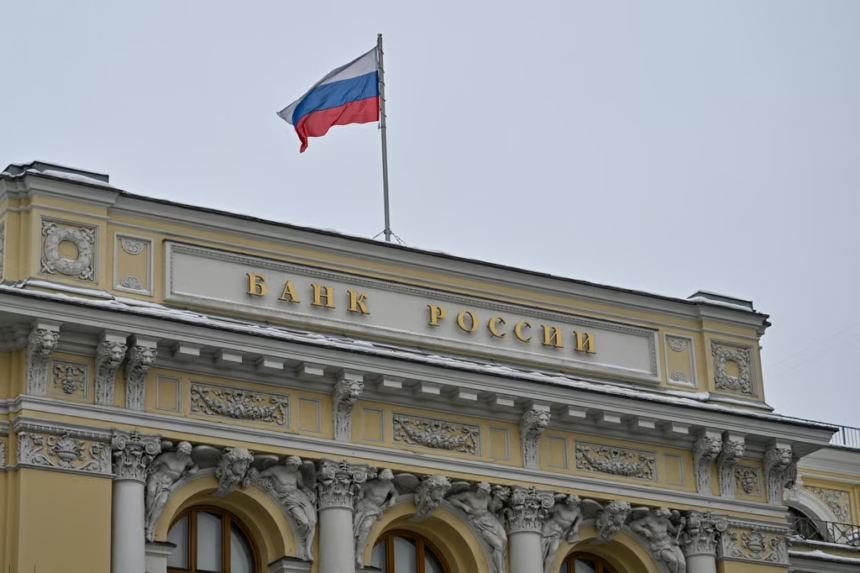
The latest payment, received by the EU on Monday, represents the fifth transfer of proceeds generated from the frozen Russian assets. According to the European Commission, the immobilized reserves have generated approximately €8 billion in windfall profits since they were frozen.
Under the latest arrangement, 95 percent of the €1.4 billion will be channeled through the Ukraine Loan Cooperation Mechanism to help Ukraine service EU and G7 loans. The remaining 5 percent will be directed through the European Peace Facility to support Ukraine’s immediate military and defense requirements.
European Commission President Ursula von der Leyen said the latest transfer came as Russia continued its aerial campaign against Ukraine.
“Russia must pay for the destruction it has caused,” von der Leyen said, adding that the EU was using proceeds from immobilized Russian assets to support Ukraine’s continued resistance to Russia’s invasion.
Her remarks followed one of the deadliest Russian attacks on Kyiv this year. Overnight missile and drone strikes killed at least 17 people and injured 44 others, hitting residential buildings, warehouses and a railway station, according to Ukrainian authorities.
Ukrainian President Volodymyr Zelenskyy said additional air-defense interceptors could have prevented some of the casualties and criticized delays in Western deliveries of air-defense systems.
The EU froze more than €210 billion in Russian central bank reserves following Russia’s full-scale invasion of Ukraine in 2022. Since 2024, financial institutions holding the assets have been required to separate the extraordinary profits generated by the frozen funds.
Brussels has so far stopped short of transferring the underlying Russian reserves themselves, instead redirecting the profits generated by the immobilized assets toward Ukraine.
The latest transfer further demonstrates the EU’s strategy of using Russia’s frozen financial holdings to support Ukraine while maintaining the legal distinction between the underlying assets and the revenues they generate.