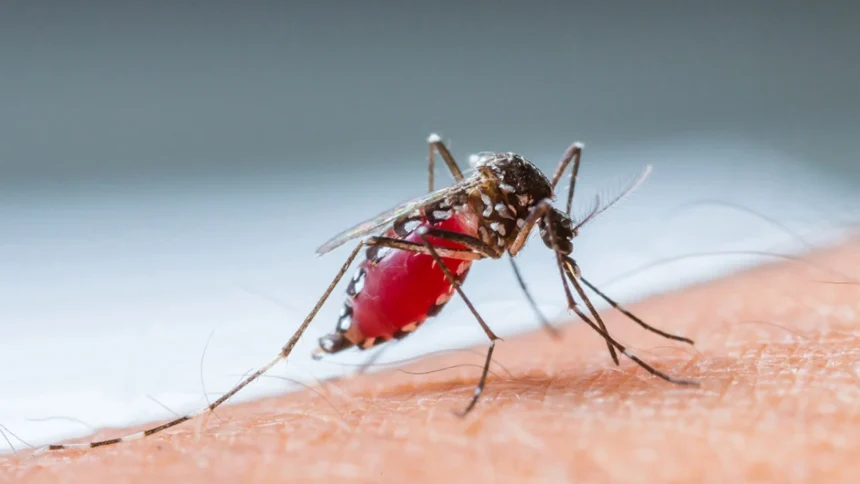
Kosovo has confirmed its first case of West Nile virus (WNV) this year, according to the National Institute of Public Health of Kosovo (NIPH-K).
The case was confirmed on Friday through the institute’s Microbiology Laboratory. The patient is a male Kosovo citizen born in 2005 who is currently receiving treatment at the Infectious Diseases Clinic of the University Clinical Center of Kosovo.
Health authorities said the patient is in stable condition and is receiving the necessary medical treatment.
An epidemiological investigation found that the patient had not traveled outside Kosovo to countries where the virus is currently circulating, suggesting that the infection was likely acquired locally.
West Nile virus is a seasonal infection that typically occurs during the summer and is transmitted primarily through the bites of infected mosquitoes. It is not normally transmitted from person to person through ordinary contact.
According to the NIPH-K, as of August 5, seven countries in the European Region had reported cases of West Nile virus this year: Italy with 139 cases, Greece with 61, Spain with 17, North Macedonia with 13, Romania with six, France with four and Germany with one.
Kosovo recorded nine cases of West Nile virus between 2021 and 2025, including seven in 2024 and one each in 2023 and 2025. Friday’s case is the first reported in Kosovo in 2026.
Health officials said around 80% of infected people develop no symptoms. In approximately 20% of cases, symptoms can include fever, headache, muscle pain, fatigue and skin rash. Fewer than 1% of infections develop into severe neurological illness, with older people and those with underlying health conditions considered at greater risk.
The NIPH-K has urged residents to take precautions against mosquito bites, including using insect repellent, wearing long sleeves and long trousers, installing protective screens on windows and doors, and removing standing water from yards, flowerpots, containers and other areas where mosquitoes can breed.
People are also advised to limit outdoor activity around dawn and dusk, when mosquitoes are more active, and to keep swimming pools, fountains and other water-holding areas clean.
Travelers visiting areas where West Nile virus is circulating are encouraged to take precautions against mosquito bites and seek medical attention if they develop symptoms during or after their trip.
The NIPH-K said it is continuing to monitor the situation and stressed that there is no reason for panic, emphasizing that simple preventive measures remain the most effective way to reduce the risk of infection during mosquito season.