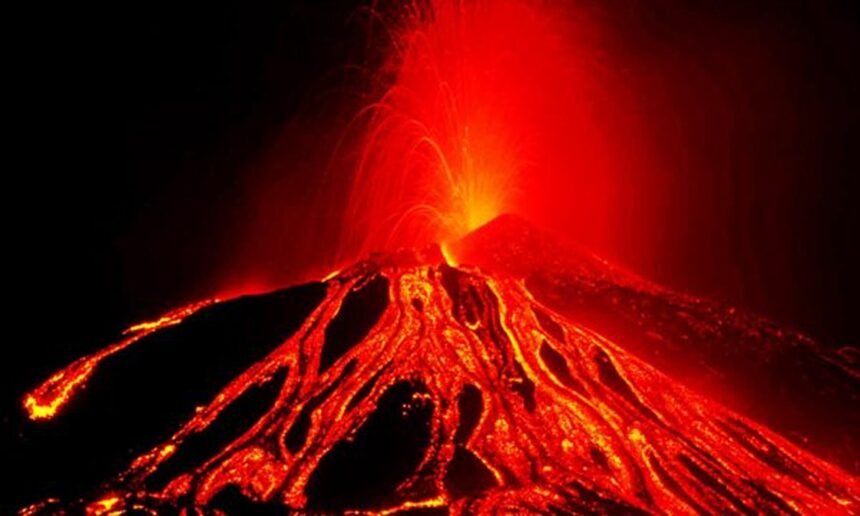
Mount Etna, one of the most active volcanoes in the world, is experiencing a powerful phase of activity in Sicily, causing major disruptions to air transport and affecting thousands of travelers at the height of the tourist season. Volcanic ash has affected the region’s airspace and has also drifted toward Malta, causing flight cancellations and delays.
Catania Airport has remained closed for the eighth consecutive day due to the danger posed by volcanic ash to aircraft. Authorities have imposed restrictions on air traffic to ensure the safety of passengers and crews, while Etna’s activity continues to be closely monitored.
But what is happening inside the volcano, and why has its activity become so intense?
According to Marco Vicaro, a professor at the University of Catania and president of Italy’s National Institute of Geophysics and Volcanology, the current activity is linked to significant changes in Etna’s internal dynamics. He argues that the process began around two years ago, when the Voragine crater experienced six consecutive eruptive episodes.
“The reactivation of the Voragine crater is causing significant changes in the volcano’s structural configuration, and this may affect its subsequent eruptive behavior for several years,” Vicaro told Corriere della Sera.
According to the expert, the activity in recent days should not be viewed as an isolated event, but rather as part of a broader process taking place within the volcano’s internal system.
Following the reactivation of the northeastern crater, Nord-Est, at the end of 2025 and its activity in early 2026, Etna’s main conduit appears to have taken on an even more important role in transporting magma toward the surface.
According to Vicaro, this conduit has the ability to transport large amounts of magma from deep within the volcano and bring it to the surface within a relatively short period.
One of the main reasons for the current intensity is also the composition of the magma. According to data cited by the professor, in June Etna was releasing magma that was closer to the surface and had a lower gas content, resulting in less explosive activity.
The situation has now changed, as the volcano is releasing magma originating from deeper areas and containing more gas. This increases pressure within the volcanic system and can trigger more powerful eruptions, also explaining the large amount of ash being released into the atmosphere.
The new phase of activity began on August 6 and has since caused ongoing disruptions to air transport in Sicily. Volcanic ash poses a serious risk to aircraft because the particles can damage their engines and systems, prompting authorities to impose flight restrictions.
Malta has also been affected. Ash carried by the winds has entered Maltese airspace, causing flight disruptions and cancellations to the island at a time when tourist numbers are at their highest levels of the year.
Despite the spectacular natural display offered by Etna, its recent activity is posing a significant challenge to authorities and the tourism sector. Experts continue to closely monitor the volcano’s behavior, while airports and airlines are adjusting their operations according to the development of the activity and the spread of volcanic ash.