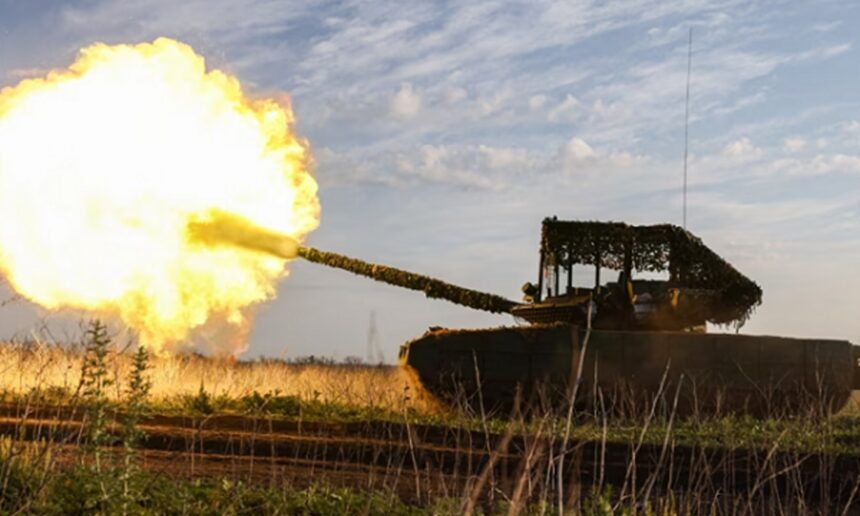
More than four years after Russia’s full-scale invasion, Moscow has failed to achieve the rapid victory the Kremlin initially expected. Ukraine has inflicted heavy losses on Russian conventional forces, exposed serious weaknesses in Russian planning and doctrine, and—through drones, electronic warfare and long-range strikes—created an innovation cycle that is constantly reshaping the battlefield.
However, experts warn that the weakening of Russia’s ground forces should not be confused with the collapse of Russian military power. Moscow continues to expand weapons production, adapt to Ukrainian tactics and draw lessons from battlefield experience. Russia also retains significant naval, nuclear, cyber and space capabilities.
🇷🇺 North Korea Is Filling Russia’s Gaps
Russia’s growing reliance on North Korea for ammunition, missiles and troops demonstrates the extraordinary scale of its wartime consumption. Pyongyang has helped Moscow address specific shortages, while Russia continues expanding its military-industrial production and seeks to avoid another politically risky mass mobilization.
This is neither clear evidence of an imminent Russian collapse nor proof that the Russian military remains intact. Russia is paying an enormous price to sustain the war and adapt to it.
🚁 Ukraine Has the Technological Edge — But Russia Is Adapting
Drones have fundamentally transformed modern warfare. Ukraine has used relatively inexpensive systems to threaten much more expensive Russian equipment and partially compensate for its shortage of manpower.
But this advantage is not permanent. Russia is increasingly copying and adapting Ukrainian technologies, developing countermeasures and expanding its own use of drones and electronic warfare.
In the Black Sea, Ukraine has also repeatedly threatened Russian naval forces and struck targets far beyond the front line, demonstrating that strategic depth no longer guarantees safety.
⚠️ Russia Is Weakened, But Still Dangerous
The war has shattered the myth that large numbers of troops and tanks alone guarantee victory. Ukraine has demonstrated that innovation, technology and rapid adaptation can impose extraordinary costs on a much larger military.
Yet Russia still possesses greater resources than Ukraine, a substantial military-industrial base, a large nuclear arsenal and military capabilities extending far beyond the heavily depleted ground forces fighting in Ukraine.
The question, therefore, is not simply whether Russia has been weakened. It is whether Ukraine can maintain its extraordinary pace of innovation faster than Russia can adapt. The outcome of that race could prove decisive in determining how the war ultimately ends.