Kosovo’s Special Prosecution has alleged that Fehim Sali, who is suspected of espionage, admitted before the Basic Court in Pristina that he had been recruited by Serbia’s intelligence service, BIA.
Following the hearing, Special Prosecutor Bekim Kodraliu said investigators had obtained sufficient evidence to support measures against Sali, who had been under investigation for more than a year.
“Based on the evidence secured by the Kosovo Police, in close cooperation with the Kosovo Intelligence Agency, we have established a well-founded suspicion that he was recruited by the Serbian intelligence service BIA, specifically by its official Zhelimir Matovic, and that he provided information to this service to the detriment of the interests of our state,” Kodraliu told RTK.
According to the prosecution file obtained by RTK, Sali allegedly provided information on Kosovo’s political situation, identified Kosovo Intelligence Agency (KIA) officials by photographing them, supplied information about individuals who were subsequently proposed as potential targets for contact or recruitment by the BIA, and facilitated matters involving property and documents linked to Serbian institutions.
The file also alleges that Sali maintained contacts with politically and socially influential individuals in both Kosovo and Serbia.
Prosecutors cited several pieces of evidence, including confirmation from the KIA that Zhelimir Matovic has been a BIA official since 2002, communication records, photographs and documentation, records of Sali’s travel to Serbia, as well as evidence seized from his vehicle and home.
During the searches, authorities seized four mobile phones, relevant documents and approximately €40,000 in cash, with the electronic devices expected to undergo forensic examination.
The prosecution also considers Sali’s Serbian citizenship a potential flight risk, arguing that he could travel to Serbia, where Kosovo has limited institutional cooperation.
According to the prosecution file, Sali’s previous position within the Office of the President of Kosovo may also have given him access to sensitive information and contacts relevant to the functioning of state institutions.
Authorities further allege that Sali was involved in mediating matters concerning Serbian property and documentation and was engaged in gathering votes for supporters of Serbian President Aleksandar Vučić.
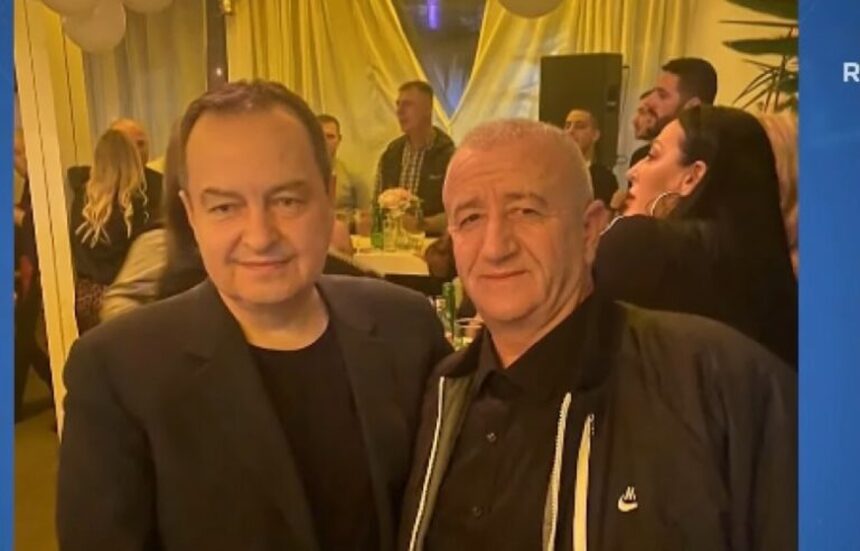
A photograph also shows Sali alongside Ivica Dačić, Serbia’s current Deputy Prime Minister and Minister of Internal Affairs.
The case has once again raised concerns over alleged Serbian intelligence activity in Kosovo. According to the authorities, at least seven people were arrested in Kosovo between 2024 and 2025 on suspicion of espionage, with several cases allegedly involving cooperation with Serbia’s BIA.