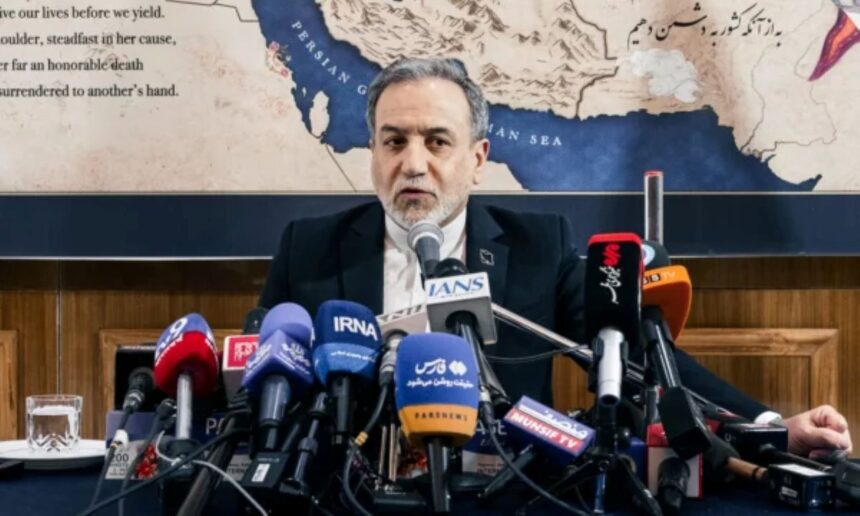
Iranian Foreign Minister Abbas Araghchi has rejected U.S. President Donald Trump’s threat to impose what he described as “devastating” economic sanctions on Iran, accusing Washington of trying to divert attention from its own economic challenges.
Araghchi responded to Trump’s latest warning in a post on X, dismissing what he called the administration’s proposed “Economic D-Day” as a distraction from the United States’ growing debt burden and rising interest costs.
“The so-called ‘Economic D-Day’ is a distraction from America’s own crisis: unprecedented debt and rising interest costs,” Araghchi wrote.
According to the U.S. Treasury Department, U.S. federal debt reached $40 trillion on Tuesday, underscoring the scale of the country’s fiscal pressures.
Araghchi warned that continuing what he described as failed U.S. policies would only produce further losses and deepen hostility toward Iran.
“Continuing failed policies will only bring further losses — and hostility from Iranians,” he said, accusing the United States of using “economic terrorism” and warning that such measures could threaten the global economy and national sovereignty around the world.
The exchange comes amid heightened tensions between Washington and Tehran following the escalation of the conflict between Iran and Israel and the broader disruption to regional energy markets.
Global oil prices have remained elevated amid concerns over disruptions in the Strait of Hormuz, a critical route for international energy shipments. Growing fears over fuel supplies have intensified as global inventories come under increasing pressure.
Trump’s administration has continued to threaten additional economic measures against Tehran as Washington seeks to increase pressure on the Iranian government.
Araghchi’s response signals that Tehran remains unwilling to concede to Washington’s demands and is instead framing the threat of additional sanctions as part of a broader confrontation over Iran’s sovereignty and the future of the regional security order.