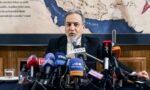
Dragan Milić, leader of Serbia’s Movement for Decentralization (PODES), has accused the ruling Serbian Progressive Party (SNS) of preparing what he described as a major electoral fraud, citing official Interior Ministry data showing that 238,890 people acquired Serbian citizenship between January 2015 and August 2025.
Milić said the figures raised questions about the composition of Serbia’s electoral rolls and alleged that newly naturalized citizens could be used to influence future elections. However, the Interior Ministry data do not establish that the people who acquired citizenship were added to the voter register or participated in elections.
According to a response from Serbia’s Ministry of Interior (MUP), 202,787 of the 238,890 new citizens acquired Serbian citizenship under Article 23, paragraph 1 of the Citizenship Law, which provides for admission to citizenship for members of the Serbian ethnic community.
The remaining cases involved other legal grounds for acquiring citizenship, including birth in Serbia, refugee status, emigration, restoration of citizenship, marriage to a Serbian citizen and international agreements.
Milić said the MUP had failed to provide information on the number of citizenships granted during the period from August 27, 2025, to August 2026, arguing that this prevented a full assessment of the situation.
He also requested information about the nationality of people who obtained Serbian citizenship. The MUP responded that it does not possess nationality data for people who acquired citizenship on several other legal grounds because applicants are not required to declare their ethnic affiliation in those procedures.
Milić links citizenship figures to electoral rolls
Milić argued that the number of newly granted citizenships represented a potential risk to the integrity of Serbia’s elections.
“Every day over the past ten years, more than 60 identity documents were issued, creating a mutant voter register in which as many as seven to eight percent of voters were added on the basis of the Citizenship Law,” Milić told Danas.
He described the alleged practice as “pre-election engineering” and claimed that people without permanent residence in Serbia could be brought in to vote.
Milić called for the authorities to urgently publish a list of everyone who received Serbian citizenship, the legal basis under which citizenship was granted and their registered permanent place of residence.
The claims have not been independently established by the data cited in the report. Acquiring Serbian citizenship does not, by itself, demonstrate that a person is registered as a voter, has voted, or has been involved in electoral manipulation.
Golubac voter-register discrepancy cited
Milić also pointed to a recent video in which a local official from Golubac reportedly told President Aleksandar Vučić that the municipality had 6,700 residents according to the population census but 8,300 people on the voter register.
Milić argued that the alleged difference of 1,600 voters illustrated the scale of what he described as potential irregularities.
He said PODES would investigate alleged abuses of the voter register if it receives sufficient support in future elections.
“We will check every abuse of the voter register,” Milić said, adding that his movement would seek sanctions against people who, according to his claim, do not reside in Serbia but vote in Serbian elections.
His remarks come as political parties in Serbia intensify their debate over electoral conditions, voter registers and the credibility of future elections.
The controversy also highlights a broader distinction between citizenship, residence and voter registration. The MUP figures demonstrate that hundreds of thousands of people acquired Serbian citizenship over the past decade, but the figures alone do not demonstrate that these citizens were improperly registered to vote or that the electoral process was manipulated.