The European Union is sending an increasingly direct message to Belgrade: how Serbia handles the return and burial of convicted war criminal Ratko Mladić will have consequences for its European path.
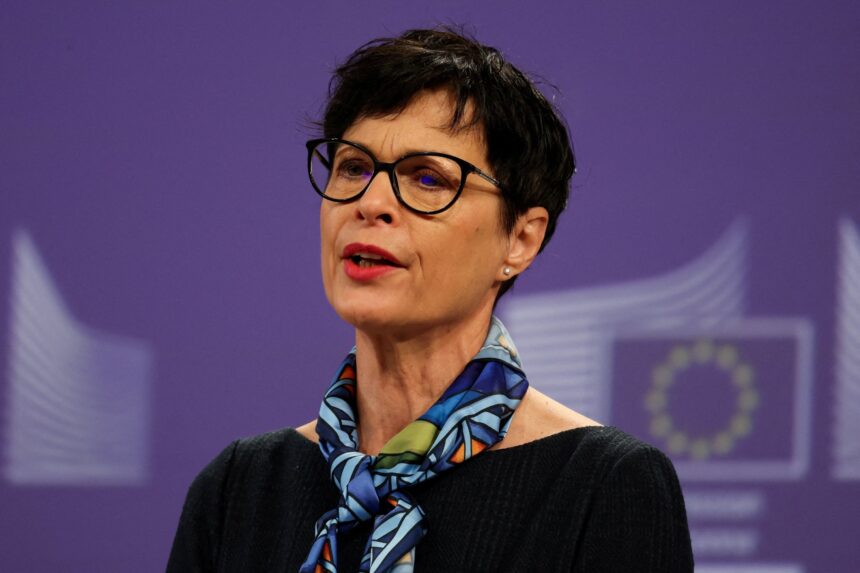
European Commissioner for Enlargement Marta Kos warned that the latest developments in Serbia could influence how EU member states assess the country’s progress toward membership.
Speaking in Dublin ahead of an informal meeting of EU ministers for European affairs, Kos said Brussels was closely monitoring developments in Serbia.
“Many things are happening in Serbia at the moment. We are following all of them, and all of them can influence the way the member states assess Serbia,” Kos said.
She stressed that Serbia’s EU integration cannot be reduced to technical negotiations. It also depends on respect for European values and alignment with the EU’s foreign and security policy.
And in that context, Kos singled out one issue in particular: the return of Ratko Mladić’s remains to Belgrade and what Serbia does next.
“The return of Ratko Mladić’s remains and what will happen in the coming days will be a very important test,” Kos said.
That warning comes as Mladić’s body has already been returned to Serbia aboard a Serbian government aircraft, with his coffin wrapped in the Serbian flag and carried from the plane by Serbian soldiers. Serbia’s Justice Minister Nenad Vujić accompanied the transfer.
Mladić died on August 27 while serving a life sentence for genocide, crimes against humanity and war crimes committed during the 1992–95 Bosnian war. He was convicted for, among other crimes, his role in the 1995 Srebrenica genocide and the siege of Sarajevo.
Yet his return to Serbia has been accompanied by scenes of glorification, including banners portraying him as a “Serbian hero.” Serbian officials have also discussed state and military honours, prompting repeated criticism from European officials.
Kos has already made the EU’s position unmistakable: glorifying convicted war criminals is contrary to fundamental European values and has no place either inside the EU or in countries aspiring to join it. She has also indicated that she intends to travel to Serbia on September 9.
The message from Brussels is therefore becoming harder to ignore.
Serbia cannot simultaneously present itself as a candidate for European integration while allowing a man convicted of genocide to be transformed into a national symbol.
The coming days will show whether Belgrade understands what is at stake — and whether its European ambitions are more than political rhetoric.
For the EU, Mladić’s return is no longer merely a question of how Serbia remembers its past.
It is a test of what kind of future Serbia wants.