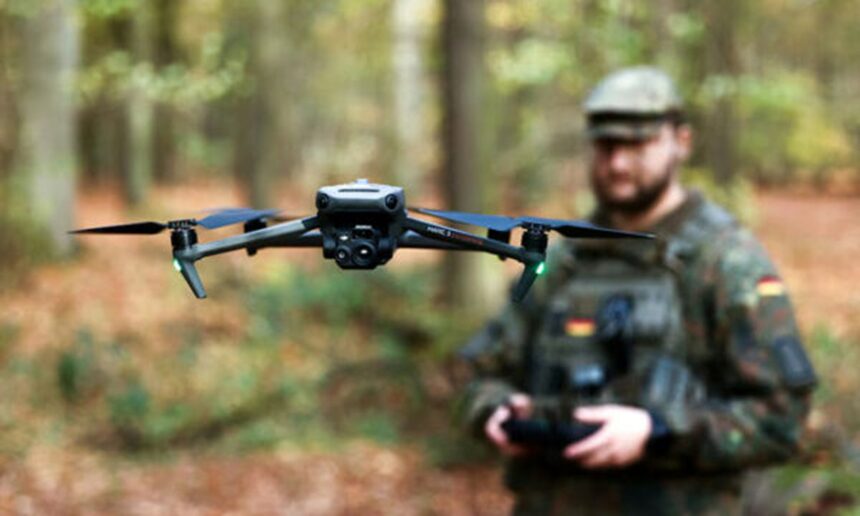
Germany’s military is evaluating around 30 artificial intelligence (AI) tools as it seeks to accelerate decision-making on the battlefield, amid growing recognition of the role technology is playing in modern warfare.
The head of Germany’s Cyber and Information Domain Service, Vice Admiral Thomas Daum, told Handelsblatt that he is optimistic a prototype could be ready by the second quarter of 2027, with full implementation expected in 2028.
The war in Ukraine has demonstrated how drones and satellites can generate enormous amounts of battlefield data, making modern conflicts increasingly “visible.” Processing and interpreting that information requires technologies capable of operating much faster than humans can.
According to Handelsblatt, most of the AI tools currently being evaluated by the German military have been developed by German companies. France-based ChapsVision is among the few foreign companies competing for a role in the project.
Germany is also taking a cautious approach toward existing U.S. technology. In April, Daum ruled out, for the time being, the purchase of the Maven Smart System, one of the best-known battlefield intelligence platforms, developed by U.S. data analytics and defense software company Palantir.
Palantir’s Maven system is used by the United States, NATO structures and several allied countries to analyze battlefield information, including images and video. The system is designed to improve situational awareness and help military commanders make decisions more quickly.
However, concerns over dependence on the United States and control over sensitive data have fueled resistance to Palantir in parts of Europe. Those concerns have become more pronounced as the administration of U.S. President Donald Trump has been viewed as less predictable regarding Washington’s long-term commitment to NATO.
Germany’s move reflects a broader European effort to develop greater technological and military autonomy while adapting to lessons emerging from the war in Ukraine.
As drones, satellites and sensors continue to produce vast amounts of real-time information, artificial intelligence is increasingly becoming a key component of modern military operations, potentially transforming how commanders detect threats, assess situations and make decisions on the battlefield.
#Germany #AI #NATO #Ukraine #Defense #ArtificialIntelligence #Palantir