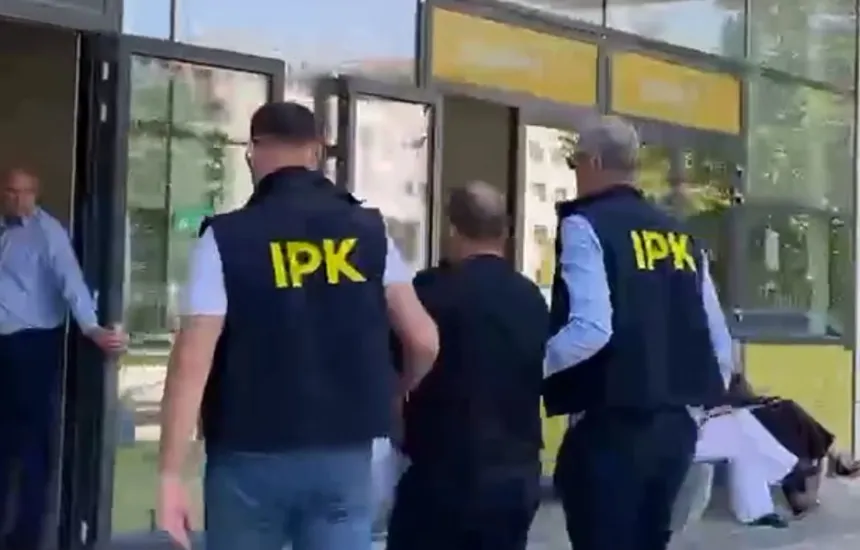
A Kosovo Police lieutenant convicted of espionage passed classified police documents and operational plans to Serbia’s Security Intelligence Agency (BIA), according to the full judgment of the Basic Court in Prishtina.
Bojan Jevtiq, a former head of operations at the Dheu i Bardhë border crossing, was sentenced to six years in prison and fined €2,000 after pleading guilty to espionage and illegal possession of weapons.
According to the court’s full judgment, Jevtiq collected and transmitted information to representatives of Serbia’s intelligence service while serving as a lieutenant in the Kosovo Police. The court considered his position as a security official an aggravating circumstance because he had a duty to protect public order and the security of Kosovo.
The court said the information involved classified documents and materials that could endanger Kosovo’s national security, constitutional order and the functioning of state institutions. It also found that the conduct took place over an extended period.
Among the materials confiscated during the investigation were Kosovo Police documents, including the Operational Plan “Target,” the operational plan concerning the implementation of a Kosovo government decision, and a plan for extraordinary elections in municipalities in northern Kosovo in 2023.
The court also confiscated an operational order concerning increased vigilance and enhanced security measures, numerous documents, CDs and other materials. According to the judgment, some of the documents were intended to be accessible only to the Kosovo Police and the Kosovo Intelligence Agency.
The court also found that documents discovered during a search of Jevtiq’s home indicated that he had been a member of the Serbian Police’s Gjilan directorate, based in Vranje, and had served as a reservist in the Serbian Army.
Guilty plea reduced sentence
Jevtiq and the prosecution reached a plea agreement, allowing him to avoid the much harsher statutory penalty for espionage, which can range from 10 years to life imprisonment.
In determining the sentence, the court considered his guilty plea, cooperation with justice authorities, remorse, the early stage at which the plea agreement was reached and the fact that he had no previous criminal convictions.
The court also took into account his family circumstances, including that he is the father of three children.
The judgment further states that Serbian currency, Swiss francs and euros were confiscated during the proceedings. Of €10,220 seized, the court ordered €3,217 returned to Jevtiq after he demonstrated that the money had been legally obtained.
The Basic Court in Prishtina convicted Jevtiq in May and sentenced him to six years in prison and a €2,000 fine for espionage and illegal possession of weapons.
The case has drawn particular attention because of the sensitivity of the information allegedly transferred to Serbian intelligence and Jevtiq’s position within Kosovo’s security institutions, highlighting the potential security risks posed by insiders with access to classified operational material.