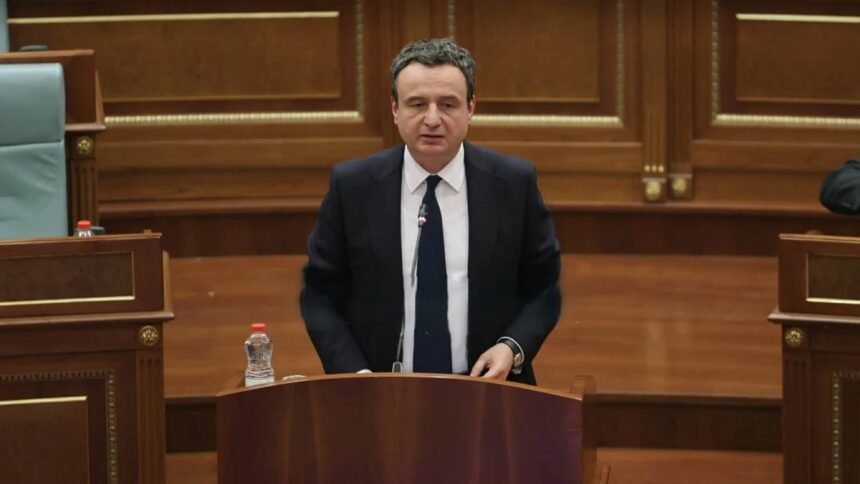
Kosovo Prime Minister Albin Kurti has called for a full and immediate investigation into the killing of Arlinda Zekaj in Vitomiricë, near Peja, stressing that she had warned of a threat to her life just three days before she was killed.
Speaking during a session of the Kosovo Assembly, Kurti said Zekaj had not received the protection she needed to survive, describing her killing as shocking and demanding accountability from the institutions responsible.
“One of our fellow citizens sought protection but did not receive the protection she needed to stay alive. Arlinda Zekaj was killed yesterday. Her brutal murder is shocking for all of us,” Kurti said.
The prime minister stated that Zekaj had approached the prosecution three days before her death, warning that her life was in danger. The circumstances surrounding her warning, he said, must be fully investigated, while the suspect in her killing remains at large.
Kurti called on the prosecution and relevant institutions to clarify how Zekaj’s reports were handled and why her warning was not followed by concrete protective measures.
“Every violation must be uncovered,” he emphasised.
Two proposed measures to prevent similar cases
Addressing lawmakers, Kurti proposed two specific measures aimed at preventing similar tragedies and identifying possible institutional failures.
The first measure calls on the Ministry of Internal Affairs, through the relevant structures of the Kosovo Police, to conduct an urgent review of active high-risk cases within 72 hours.
For every case reviewed, Kurti said, authorities should document the security measures in place, identify the officer responsible for monitoring their implementation and ensure coordination among the relevant institutions at both central and local levels.
The second measure calls on the Ministry of Justice to prepare a detailed report on Zekaj’s case. The report should establish how the institutions involved in the case responded—or failed to respond—and help clarify whether there were shortcomings in the institutional chain.
Through these proposals, Kurti said the authorities must examine the conduct of the responsible institutions and identify any failures in handling cases in which victims warn that their lives are at risk.
The case has renewed scrutiny of how reports of domestic violence and threats to life are handled by Kosovo’s law enforcement and justice institutions, particularly when victims have already sought help before being killed.