What happens when you decide to listen to all 193 speeches of the United Nations General Assembly?
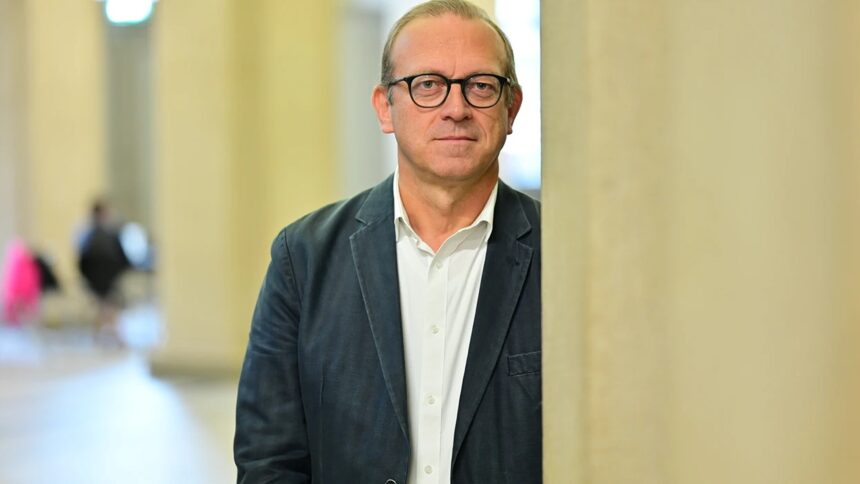
A correspondent for the German newspaper Süddeutsche Zeitung decided to experience it for himself. He says that for a week he sat on a plastic chair in New York and followed, one after another, the speeches of world leaders. What he noticed during this time, according to him, was that alongside important political speeches, there were also unusual moments, while inside the hall there were often more and more empty seats.
The correspondent observes that not all leaders attract the same level of attention. When U.S. President Donald Trump speaks, he says, the hall is noticeably fuller. The same applies to the leader of China and the President of Ukraine. For many other leaders, according to his observation, the audience becomes smaller and the speeches continue in front of rows of empty seats.
Among the speeches he highlights is that of the President of Mongolia, Ukhnaagiin Khürelsükh. The correspondent explains that the Mongolian president referred to a 1305 letter written by Mongol ruler Öljeitü to French King Philip the Fair, conveying the message that there is nothing better than reconciliation and understanding. Khürelsükh, according to him, connected this historical idea with the concept of a “Pax Globalica,” a world in which different cultures coexist instead of constantly turning against one another.
He also mentions the fact that the Mongolian president announced his country’s candidacy for a non-permanent seat on the UN Security Council for the years 2048 and 2049. The correspondent highlights this as an example of diplomatic planning for a very distant future.
Another detail he brings from the Mongolian president’s speech is World Horse Day. Khürelsükh spoke about the contribution of horses to human history and about celebrations in Mongolia, where around 10,000 horses and riders took part in a parade, together with guests from 56 countries.
The correspondent also focuses on the President of Nauru, David Adeang. He writes that Adeang asked for his country not to be called “Nauru” anymore, but “Naoero,” arguing that the name has been mispronounced by the international community.
From the speech of Swiss President Guy Parmelin, the correspondent highlights the metaphor about Switzerland’s mountains, valleys and linguistic diversity. Parmelin said: “We did not flatten the mountains. We learned to climb them. And later, to cut through them.” According to him, roads, bridges and tunnels have connected communities that were once separated by natural barriers.
In his account after a week of 193 speeches, the correspondent does not focus only on what the leaders say, but also on what happens in the hall while they are speaking: who is there to listen to them and who leaves.
And precisely this, according to his observation, is one of the most interesting images of the United Nations General Assembly: 193 states have the opportunity to speak, but international attention is not distributed equally.