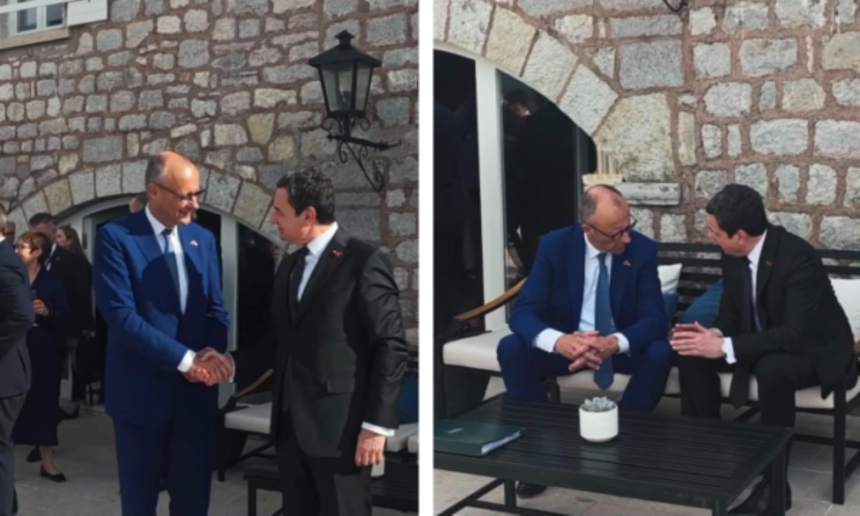
Kosovo Prime Minister Albin Kurti has met with German Chancellor Friedrich Merz during the 13th Berlin Process Summit, highlighting Germany’s economic contribution to Kosovo and opportunities for further cooperation across several sectors.
Kurti shared footage from the summit and said Merz had congratulated him on his new mandate during their conversation.
The meeting comes after the German Bundestag decided to extend the deployment of German troops in Kosovo as part of NATO’s KFOR peacekeeping mission.
Kurti also praised Germany’s role in launching the Berlin Process in 2014, saying the initiative created a framework in which the six Western Balkan countries could cooperate and participate on an equal footing.
German Investment in Kosovo Totals €1.5 Billion
According to Kurti, German direct investment in Kosovo has reached approximately €1.5 billion, with 62 percent of that amount invested over the past five years.
He identified industry, energy, transport, information and communications technology (ICT), and vocational education as sectors with significant potential for further German investment.
Kurti also announced that Prishtina would host the third German-Kosovan Economic Forum the following week, providing another opportunity to strengthen economic ties between the two countries.
Regional Cooperation and European Integration
Kurti said Kosovo had signed and implemented agreements under the Berlin Process on travel using identity cards and mutual recognition of diplomas.
He called on all participating countries to fulfil their commitments, arguing that no country should be allowed to hold the region back.
“Germany is part of our European future,” Kurti wrote, thanking Chancellor Merz for the meeting and reaffirming Kosovo’s commitment to closer cooperation with Berlin.
The Berlin Process, launched by Germany in 2014, aims to strengthen regional cooperation among the Western Balkan countries and support their progress towards European integration.