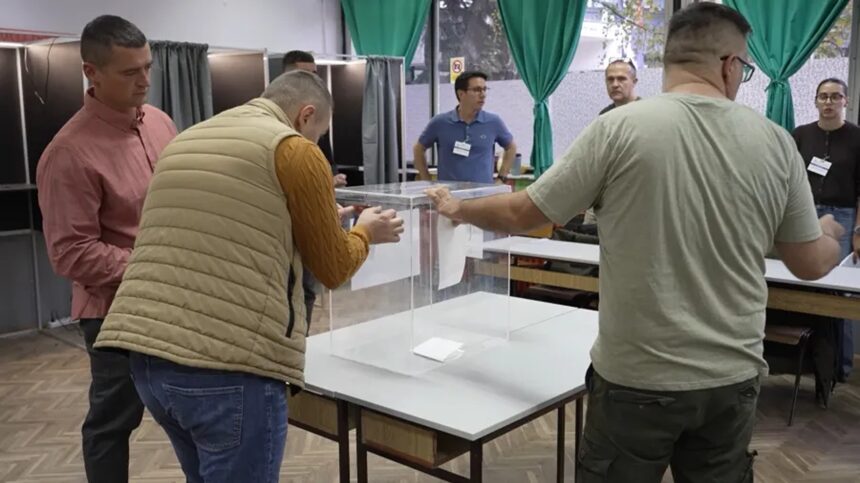
Branko Josipović, Director of the Republic Statistical Office, announced that 34.55% of registered voters in Serbia had cast their ballots by 12:00 p.m.
In the Vojvodina region, turnout reached 38.08%, while 32.56% of voters had cast their ballots in Šumadija and Western Serbia, 31.96% in Southern and Eastern Serbia, and 35.23% in Belgrade.
In the 2023 elections, voter turnout by 12:00 p.m. stood at 21.33%.
Meanwhile, Albanian political parties from the Preševo Valley are contesting Serbia’s October 25 elections on a joint electoral list. The Albanian Coalition appears on the ballot as number 17.
Whenever the Albanian political parties in the Preševo Valley have united, their cooperation has generally translated into stronger electoral results and greater representation in Serbia’s 250-seat National Assembly. When they have run separately, Shaip Kamberi has typically been the main representative of the Albanian community in recent years.
In 2020, for the first time, all Albanian parties from the Preševo Valley united to contest the elections on a single list. It was also the first time Albanian representatives secured three seats in Serbia’s parliament.
A total of 2,418 candidates from 18 electoral lists are competing for the 250 seats in Serbia’s National Assembly. The electoral threshold for entering parliament is 3%, while a natural threshold applies to lists representing national minority communities.