Kosovo Assembly Deputy Speaker Emilija Rexhepi has criticized what she described as an excessive focus on the Serbian community in discussions about Kosovo’s non-majority communities, urging greater attention to the rights, needs and integration of all ethnic groups.
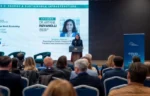
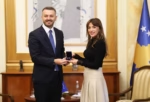
Rexhepi made the remarks during a meeting on Wednesday with a delegation of parliamentarians from NATO member states visiting Kosovo.
Responding to questions from delegation members about the willingness of Kosovo Serbs to integrate into the country’s institutions, Rexhepi said she was frustrated that discussions about non-majority communities almost always centered on Serbs.
“We are tired of the fact that almost every discussion about non-majority communities in Kosovo focuses exclusively on the Serbian community,” she said.
Rexhepi opposes a separate political entity
Rexhepi also addressed the proposed Association of Serb-Majority Municipalities in Kosovo, saying she did not want the country to develop a political arrangement similar to Republika Srpska in Bosnia and Herzegovina.
She acknowledged that she had previously voted in support of the process but said her backing had been based on the expectation that the mechanism would help integrate Kosovo Serbs into the country’s institutional system, rather than create parallel structures or a separate political entity.
“I do not support the creation of any separate political entity within the Republic of Kosovo,” Rexhepi said.
She warned that a model similar to Republika Srpska could deepen ethnic and institutional divisions.
“We need integration, not segregation. We need shared institutions, not new political and territorial divisions,” she said, pointing to the importance of common educational, healthcare and cultural institutions.
Rexhepi, who represents Kosovo’s Bosniak community, added that Serbian community representatives should speak for themselves regarding their political positions, needs and aspirations.
Doubts over Serbia’s political direction
The meeting also touched on the recent political changes in Serbia following the electoral victory of the student-backed list. Rexhepi expressed reservations about whether a change in government would necessarily lead to a fundamental shift in Belgrade’s policies toward Kosovo, Bosnia and Herzegovina, and other countries in the region.
She said statements made so far by representatives of the student-backed list had not given her sufficient confidence that a new government would pursue a more moderate approach based on peace, stability, good-neighborly relations and respect for the sovereignty of neighboring states.
“A change of government does not necessarily mean a change of policy,” she said, adding that it remained to be seen whether substantial changes would follow.
Kosovo’s future lies in Euro-Atlantic integration
Concluding her remarks, Rexhepi reaffirmed her commitment to building a democratic, multiethnic and secure Kosovo in which all citizens enjoy equal rights, opportunities and responsibilities.
She said Kosovo’s future lies in Euro-Atlantic integration, peace and mutual respect, regardless of national, religious or ethnic background.
Her comments came during a visit by the NATO Parliamentary Assembly delegation, which has held discussions with Kosovo officials on regional security, democratic institutions and the country’s Euro-Atlantic aspirations.