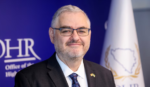
Kosovo’s Minister for Communities and Returns, Nenad Rašić, said he had anticipated the outcome of Serbia’s October 25 elections, in which the student-backed Students’ List defeated President Aleksandar Vučić, and expressed hope that the political changes could create opportunities for improving relations between Kosovo and Serbia.
Speaking on Tëvë1’s Këndi i Debatit program, Rašić said he had discussed the elections with several ambassadors during the previous week and predicted a strong result for the Students’ List.
“I expected this result. I met with several ambassadors last Monday and Tuesday, and I told them that the Students’ List would win with 52.4 percent, while Vučić would receive no more than 40 percent,” Rašić said.
He added that he had also discussed his expectations with Kosovo’s prime minister, predicting that the student-backed list would secure more than 50 percent of the vote.
Recognition of Kosovo Could Require a Longer Process
During the interview, Rašić was also asked whether representatives of the Students’ List might eventually recognize Kosovo’s independence.
He said immediate recognition should not be expected, suggesting instead that any progress would depend on a longer process of negotiations and structural solutions to outstanding issues between the two countries.
Rašić emphasized the importance of respecting agreements already reached between Kosovo and Serbia, including commitments not to obstruct their implementation.
“I see an open door. Apart from the fact that they do not recognize Kosovo, that much I know; the rest, I do not know. I know they are peaceful and are not criminals. I am convinced that it is better to spend a thousand days negotiating than one day at war,” Rašić said.
His remarks suggest that he sees the political changes in Serbia as a potential opportunity for dialogue, while acknowledging that the question of Kosovo’s recognition remains unresolved.
Rašić stressed that continued negotiations and efforts to find peaceful solutions are essential to the future of relations between Prishtina and Belgrade.
However, his comments do not establish that the Students’ List has changed its position on Kosovo’s independence. Any shift in policy would depend on the positions adopted by Serbia’s future political leadership and the course of negotiations between the two sides.