

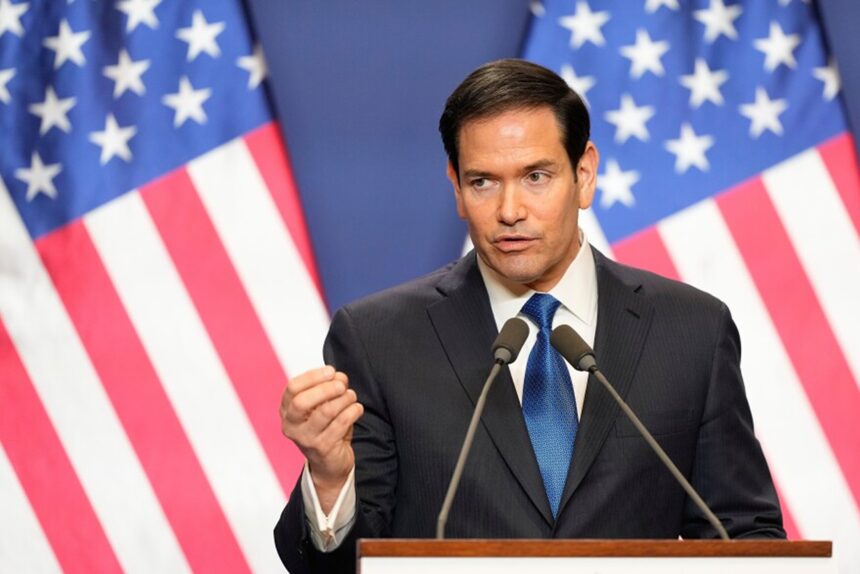
Two Republican members of the U.S. Congress have urged Secretary of State Marco Rubio to consider imposing visa restrictions on Albanian officials against whom credible information exists indicating involvement in significant corruption.
The request comes as Albania faces ongoing anti-government protests and renewed scrutiny of the country’s democratic institutions and rule of law.
According to a report by Fox News, Representatives Joe Wilson and Keith Self, who chairs the House Subcommittee on Europe, sent a letter to Rubio expressing concern about the state of democracy and the rule of law in Albania.
The lawmakers emphasized that the United States has invested in Albania’s judicial reform process and has a strong interest in ensuring that the institutions established under the reform operate independently.
Wilson and Self called on the State Department to consider using the authority provided under Section 7031(c) of U.S. foreign operations appropriations legislation.
The provision allows the United States to publicly designate foreign officials and their immediate family members as ineligible for entry into the country when credible information indicates their involvement in significant corruption.
The lawmakers’ request does not mean that visa restrictions have been imposed or that a decision has been made to introduce sanctions. Instead, it calls on the U.S. administration to assess whether the legal requirements for such action have been met.
Four issues raised in the letter
Wilson and Self have requested a response by November 5 addressing four issues: the possible consideration of visa restrictions, U.S. support for Albania’s judicial reform, the role of the U.S. Embassy in Tirana in protecting protesters and journalists, and developments concerning former Deputy Prime Minister Belinda Balluku.
According to Fox News, the congressmen referred to the investigation into Balluku over alleged interference in public procurement procedures related to road construction projects.
The lawmakers expressed concern that anti-corruption institutions may struggle to operate effectively if political leaders protect officials who are under investigation.
Their intervention places renewed attention on Washington’s approach to Albania’s judicial reform and its expectations regarding institutional independence, accountability and the protection of civil liberties.
The next steps will depend on the U.S. administration’s assessment of the concerns raised in the letter and whether it determines that the legal conditions for visa restrictions have been satisfied.