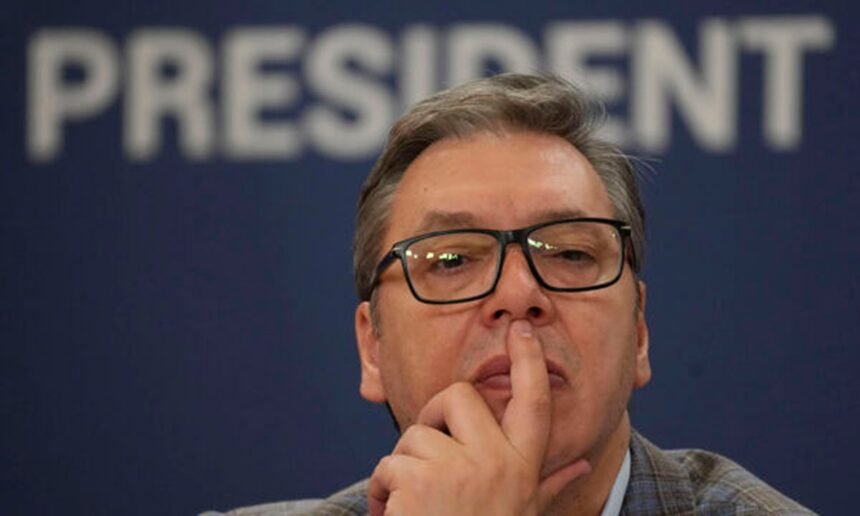
Serbia is facing a deepening institutional crisis marked by escalating tensions between the executive branch and the judiciary, raising serious concerns about the state of the rule of law and democratic governance. Recent public attacks on the Prosecutor’s Office for Organized Crime, coupled with open defiance of legal procedures by senior officials, have intensified domestic and international scrutiny of President Aleksandar Vučić’s administration.
Over the past days, political leaders and pro-government media outlets have launched coordinated criticism against prosecutors investigating high-level corruption and abuse of office. Legal experts and civil society organizations warn that such pressure undermines prosecutorial independence and signals an erosion of constitutional order. The Prosecutor’s Office for Organized Crime has become a focal point of these confrontations, following investigations involving current and former government officials.
The crisis has been further exacerbated by public statements from senior officials who have dismissed or ignored legally binding summonses to appear before prosecutors. Observers note that such actions challenge the principle of equality before the law and risk normalizing impunity for those holding public office. Former justice officials have emphasized that refusal to cooperate with judicial authorities represents a serious institutional breach rather than a political dispute.
In parallel, concerns have been raised over the broader weakening of public institutions, including the cultural sector, which analysts say has increasingly been subjected to political influence. Critics argue that appointments based on loyalty rather than professional merit have contributed to declining standards and reduced institutional credibility across multiple sectors of public administration.
Judicial representatives have also reacted more openly than in previous years. Associations of prosecutors and judges have issued statements defending institutional independence and warning against political interference. This response marks a notable shift, as members of the judiciary have traditionally refrained from public confrontation with the executive due to political pressure and concerns over personal and professional repercussions.
Opposition parties have accused President Vučić of deliberately undermining legal institutions to shield political allies from accountability. They argue that sustained attacks on prosecutors and judges are part of a broader pattern of governance characterized by centralized power, weakened checks and balances, and restricted space for dissent. Government officials, however, reject these claims, insisting that Serbia remains committed to European integration and legal reforms.
International observers have repeatedly emphasized the importance of judicial independence as a key condition for Serbia’s progress toward European Union membership. Recent developments have renewed calls from EU officials and human rights organizations for Belgrade to ensure respect for the separation of powers, protect independent institutions, and guarantee that all public officials are subject to the law.
As tensions continue, analysts warn that the outcome of this confrontation will have long-term implications for Serbia’s democratic trajectory. Whether institutions can withstand sustained political pressure—or whether the erosion of legal norms will deepen—remains a critical question for the country’s future governance and its relationship with European partners.