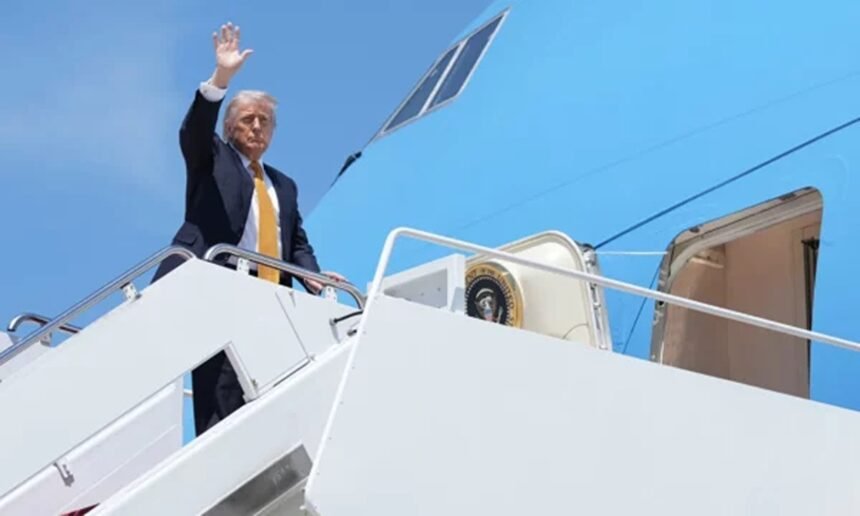
A Chinese-flagged oil supertanker was reportedly seen attempting to pass through the heavily restricted Strait of Hormuz on Wednesday, as Donald Trump travels to Beijing for a high-stakes meeting with Chinese President Xi Jinping, according to reports from CNN.
The vessel, identified as the Yuan Hua Hu, was observed moving eastward through the strategic maritime corridor early Wednesday morning, based on ship-tracking data from MarineTraffic.
Tracking information shows the tanker’s signal disappeared around 8:45 a.m. local time, raising questions about whether the vessel intentionally switched off its Automatic Identification System (AIS), a practice often associated with sanctions evasion or heightened security risks.
Strait of Hormuz Under Growing Pressure
Traffic through the Strait of Hormuz — one of the world’s most critical oil shipping routes — has slowed dramatically since the outbreak of the conflict involving Iran.
Commercial vessels attempting to cross the area face increasing risks of interception, attack, or detention, while the United States has reportedly imposed a naval blockade targeting Iranian ports.
According to the tracking data, the Yuan Hua Hu had previously docked at the Iranian port of Asaluyeh on February 28 — the same day the war began — and has remained active inside the Persian Gulf ever since.
Its last recorded stop before the latest movement was in the United Arab Emirates on March 20.
Trump Expected to Pressure China Over Iran
Trump is expected to urge Xi Jinping to use China’s influence over Iran to help reopen the Strait of Hormuz and push Tehran toward a broader peace arrangement.
China remains the largest importer of Iranian oil and has relied heavily on a so-called “shadow fleet” of tankers to move crude oil between Iranian ports and smaller independent refineries often referred to as “teapot refineries.”
The developments underscore growing geopolitical tensions surrounding energy security, maritime trade routes, and the expanding strategic rivalry between Washington, Beijing, and Tehran.