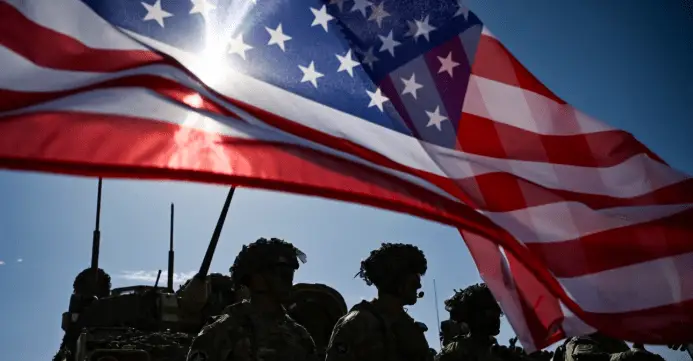
The United States has formally begun a comprehensive review of its military presence in Europe, a move aimed at ensuring that European NATO allies assume greater responsibility for the continent’s conventional defense.
Elbridge Colby, the Pentagon’s Under Secretary of Defense for Policy, announced the start of the review on X, describing it as “a real review” intended to align U.S. force posture with Washington’s evolving strategic priorities.
According to Colby, the assessment is designed to ensure that NATO moves more rapidly toward a defense structure in which European allies take the leading role in safeguarding the continent.
U.S. President Donald Trump has long criticized European NATO members for insufficient defense spending, arguing that the United States has carried a disproportionate share of the alliance’s security burden. In recent months, however, several allies—including Germany—have significantly increased their military budgets.
Defense Secretary Pete Hegseth first announced the review during the NATO defense ministers’ meeting in Brussels in June, saying the process would take approximately six months.
“NATO has for too long been a paper tiger and a one-way street, but that era is over,” Hegseth said at the time, while acknowledging progress made by European allies in strengthening their military capabilities. He also suggested that some NATO members had failed to fully support recent U.S. military operations against Iran.
Although Colby did not specify which elements of the U.S. military posture are under review, previous media reports indicated that the Pentagon could assess not only troop numbers but also the deployment of fighter aircraft, drones, aerial refueling assets, and naval forces stationed across Europe.
The United States currently maintains approximately 80,000 military personnel on the continent.
The Pentagon said the review is intended to ensure that America’s military presence in Europe reflects current geopolitical realities and supports the broader defense strategy of the Trump administration.
Under the strategy unveiled earlier this year, Washington continues to view NATO as a vital alliance but has shifted its primary strategic focus toward defending the U.S. homeland and deterring China.
Earlier this year, the Trump administration also signaled plans to reduce the number of U.S. troops stationed in Germany, prompting concern among local communities and European officials. Reports have suggested that at least 5,000 troops could be withdrawn over the next six to twelve months, while plans to deploy long-range cruise missiles to Germany have also been suspended.