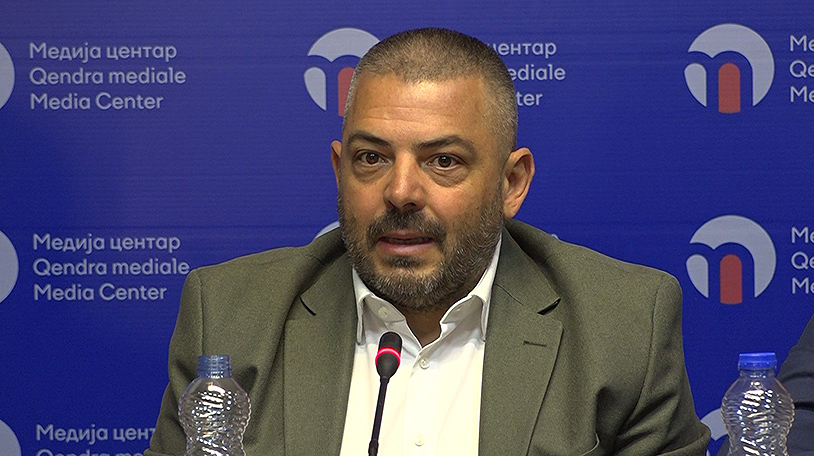
Former Serbian parliamentarian and founder of the Kosovo Alliance, Žarko Ristić, has called for the resignation of Petar Petković, director of Serbia’s Office for Kosovo and Metohija, accusing him of pursuing policies that have seriously harmed Serbs in Kosovo.
Ristić has also urged the competent public prosecutor’s office to investigate suspected double financing of projects and payments for work that may never have been carried out.
“My assessment is clear: the policy he represents has caused serious harm to our people, and he must bear political responsibility for it,” Ristić said.
Ristić, who says he was among the first to support the student movement in Serbia, called on Petković to explain publicly what his policies had promised, what had actually been delivered and what benefits citizens had received.
“You cannot ask for the people’s trust while refusing to take responsibility for your own decisions and results,” he said.
Calls for investigation into project financing
Ristić stressed that Petković’s possible resignation should not bring the matter to a close. Instead, he argued, the authorities must investigate how funds allocated to Serbs in Kosovo have been spent.
He said he had previously called for scrutiny of the financing of disputed projects while serving on the Serbian parliament’s Committee on Kosovo and Metohija.
“I call on the competent public prosecutor’s office to investigate suspicions of double financing of the same projects, as well as payments for projects that exist only on paper,” Ristić said.
He specifically called for an examination of Petković’s role in approving funding, including the decisions he made, the documents he signed and the mechanisms used to monitor whether the money was spent for its intended purposes.
Ristić said investigators should examine contracts, payments, implementation reports and the actual conditions on the ground. The aim, he argued, should be to establish how much money was allocated to each disputed project, who received the payments and what work was completed in return.
“If the same work was paid for multiple times or money was disbursed for work that was never carried out, the responsibility of everyone involved must be established, without protecting anyone because of their name or position,” he said.
Demands for financial transparency
Ristić also called for the publication of documentation relating to the disputed projects, insisting that funding intended to support the Serbian community in Kosovo must be subject to transparent oversight.
“Money intended for the survival of our people in Kosovo and Metohija is nobody’s private fund. Every dinar must be traceable, every project must produce results, and every abuse must have consequences for those responsible,” he said.
He emphasized that political accountability and potential criminal liability are separate matters, arguing that a resignation would not remove any legal responsibility if investigators establish that the law had been violated.
“Resignation is a matter of political responsibility. If a violation of the law is established, it does not exempt anyone from criminal responsibility,” Ristić concluded.
The allegations outlined by Ristić have not been independently verified in the report. No response from Petković or Serbia’s Office for Kosovo and Metohija was included in the available account.