The value of new loans issued by banks in Kosovo during 2025 reached €2.684 billion, marking an increase of 3.8 percent compared to the previous year. This rise is assessed as a direct consequence of the political deadlock and the lack of capital projects.
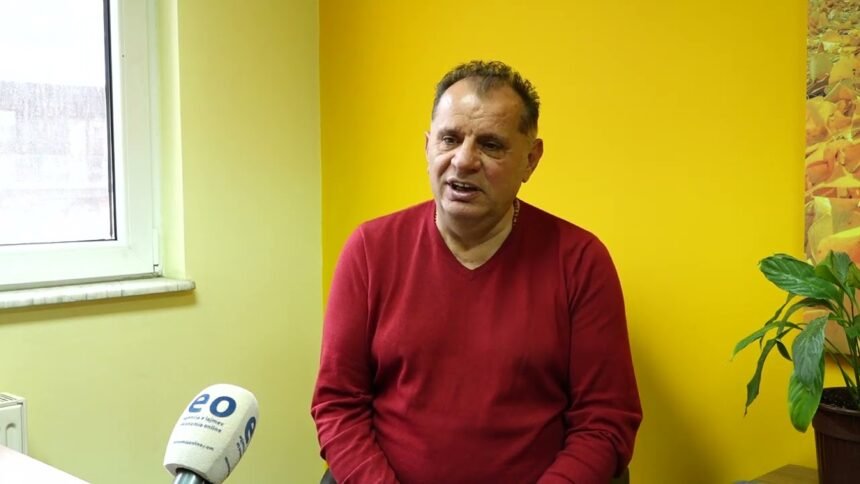
Former President of the Kosovo Chamber of Commerce, Safet Gërxhaliu, stated that Kosovo urgently needs genuine dialogue and political stability, instead of banks becoming the only solution for citizens—and in some cases, microfinance institutions or even criminalized forms such as usury.
“The economic aspect in Kosovo is truly worrying. Citizens and businesses understand this, but unfortunately politicians do not. There is suffocation and a lack of liquidity because for a year and a half we have had no institutions, and for a year and a half there have been no public-private partnership projects implemented by the private sector,” he said.
According to him, one of the most serious consequences of this lack of liquidity is the inability of businesses to settle debts with one another.
“We have inter-business debts for services and completed work, and all of this seriously challenges the private sector, which is forced either to turn to commercial banks for loans, to microfinance institutions, or even to other criminalized forms where usury flourishes. We warned that such a situation would lead to rising credit levels. What we are seeing now is a silent increase in bank interest rates, and it should not surprise us why commercial banks in Kosovo are generating such profits—they are the only address for the private sector,” he emphasized.
Gërxhaliu stressed that solutions should not be sought only in banks, but in political stability.
“That is why I believe the time has come for stable institutions, political stability, and genuine dialogue, instead of banks always being the only solution. The fact that Kosovo has over 200,000 registered companies, but only about one-third of them are active, best demonstrates the economic passivity that has gripped Kosovo,” he underlined.
He added that the profits of commercial banks are a direct result of “institutional silence” and the lack of alternatives for the private sector.
“It is time to do more for the economy. It should not irritate us that commercial banks are profiting—they are simply taking advantage of institutional silence. If there were projects and genuine cooperation with the private sector, the address would be institutions, not commercial banks,” he said.
Beyond businesses, Gërxhaliu also highlighted the difficult situation faced by Kosovar families.
“Alongside the increase in business loans, we are also seeing growth in overdrafts and consumer loans, which should be the greatest concern. Life in Kosovo is becoming more expensive and increasingly unaffordable. The fact that 48% of families in Kosovo could not afford an additional €200 in expenses clearly shows Kosovo’s economic and social reality, and above all, how the private sector and citizens are being treated,” he added.
The value of new loans issued by banks in Kosovo during 2025 reached €2.684 billion, compared to €2.587 billion in 2024.