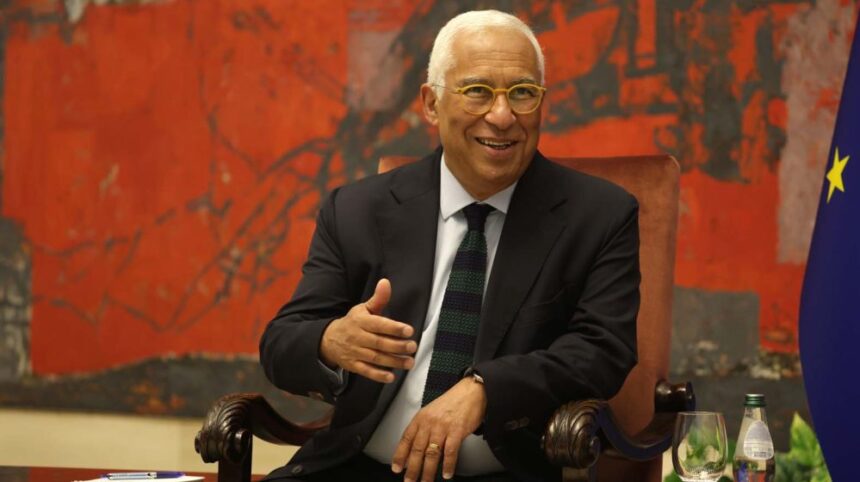
European Council President António Costa has said the European Union is ready to support Serbia’s new government in advancing its European integration process, with particular emphasis on the rule of law, media freedom and the fight against corruption.
Speaking at the Euronews EU Enlargement Summit 2026, Costa argued that EU enlargement should be viewed as an investment in shared prosperity and European security rather than a burden.
“Enlargement serves the same purpose in today’s uncertain world: strengthening Europe as a geopolitical actor, a resilient economic power and a force for peace,” Costa said.
He stressed that enlargement was not only about expanding the European Union but also about fulfilling the aspirations of millions of Europeans who had chosen democracy, freedom and cooperation.
“These efforts, as well as the difficult reforms they are undertaking, deserve our solidarity and political commitment,” he added.
Costa said the accession process must remain fair, consistent and merit-based as the EU prepares to welcome new members.
He also emphasized that joining the bloc involves more than aligning legislation and institutions. It requires building trust, resolving disputes through diplomacy and overcoming historical divisions.
“Enlargement is not a burden to be managed, but an investment in our shared prosperity,” he said.
Enlargement has brought economic benefits
Costa pointed to the 2004 enlargement as evidence of the economic benefits of expanding the European Union.
Since then, more than 100 million people have joined the bloc, while the EU’s combined economy has grown by more than €2 trillion, he said.
The economies of Central and Eastern European countries that joined 22 years ago have more than doubled in size. New member states have also contributed to the creation of 26 million jobs, including more than six million in their own countries.
Costa argued that the benefits of enlargement should begin before formal accession through gradual integration into the EU’s economic structures.
For the Western Balkans, he highlighted the Growth Plan and other European initiatives supporting investment, economic convergence and closer integration with the EU single market.
Progress includes participation in the Single Euro Payments Area (SEPA), improvements at border crossings, stronger transport connections, digital initiatives and lower roaming costs.
Montenegro aims to join by 2028
Costa also highlighted progress in the accession negotiations of Montenegro, Albania, Ukraine and Moldova.
He said Montenegro was approaching the completion of negotiations across all chapters and was expected to provisionally close another negotiating chapter soon.
“I am confident that Montenegro can deliver. We are ready to continue supporting Montenegro as it completes the remaining work,” he said.
“I believe Montenegro can become the 28th member by 2028,” Costa added.
He also welcomed Albania’s progress in provisionally closing additional negotiating chapters, while Ukraine and Moldova have opened negotiations on new clusters.
EU ready to support Serbia’s new government
Addressing Serbia, Costa said the recent elections reflected citizens’ aspirations for a stronger, fairer and more accountable society.
“These aspirations are fully aligned with the European Union accession process. The European Union is ready to support Serbia’s new government on its European path, with a particular focus on the rule of law, media freedom and the fight against corruption,” he said.
Costa also expressed confidence that North Macedonia, Bosnia and Herzegovina, and Kosovo could make further progress and accelerate the reforms needed to advance toward EU membership.
He said he would discuss these issues with Western Balkan leaders at the fourth EU–Western Balkans Summit, scheduled to take place in three weeks during his mandate.
Ukraine and Moldova also advancing toward the EU
Costa said closer cooperation with the EU had brought tangible benefits to Moldova and Ukraine, including visa liberalization, lower roaming costs, energy assistance and infrastructure investment.
These measures, he argued, had strengthened both countries’ resilience and brought their citizens and economies closer to the European Union.
He singled out Ukraine, which continues to face Russia’s full-scale war, as a country for which European support remains particularly significant.
Regarding Moldova, Costa said the country’s progress in implementing reforms and aligning its legislation with EU standards could allow it to advance rapidly once all negotiating clusters are opened.