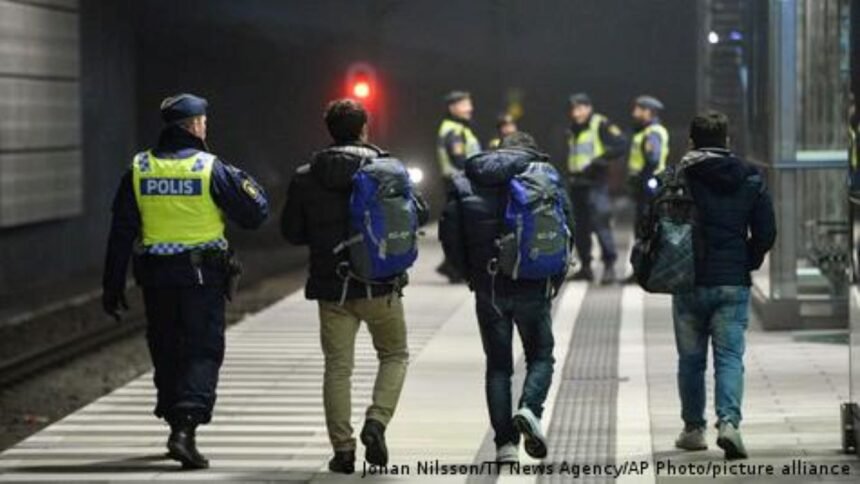
The European Commission has formally declared that generalized, prolonged internal border checks within the Schengen Area are no longer sufficiently justified. While recognizing regional migration complexities, Brussels is pushing member states toward modern, technology-driven alternatives to restore seamless free movement.
The European Commission (EC) has issued a formal opinion stating that Germany’s sweeping internal border controls—in place across all its land borders since September 2024—lack adequate justification for long-term maintenance.
According to the executive branch of the European Union, the data and security assessments provided by Berlin fail to clarify why a uniform domestic threat level exists across every single border segment. Furthermore, Brussels noted that the federal government failed to demonstrate why continuous six-month extensions, rather than shorter, localized periods, are considered appropriate.
To date, Germany has extended these internal checks three times, with the current mandate set to remain in place until mid-September 2026.
Brussels Recommends High-Tech Alternatives
While the EU Commission does not establish a rigid, hard deadline for Germany and other member states to completely dismantle their checkpoints, it has issued a clear roadmap toward a “gradual termination and lifting of internal border controls.”
The EC emphasizes that more efficient, targeted methods exist to safeguard national security without choking intra-European trade and travel:
- Selective Policing: Shifting from static checkpoints to intelligent, profile-based mobile police checks in border regions.
- Biometric Identification: Leveraging advanced digital screening technologies to track known security threats.
- Automated Vehicle Tracking: Utilizing digital surveillance and license plate recognition systems to monitor transport routes seamlessly.
Despite efforts by German authorities to minimize economic and logistical disruptions, the European Commission revealed it has been flooded with a high volume of formal complaints from cross-border workers, travelers, and commercial businesses.
The Legal Framework: Temporary Measures vs. Permanent Practices
Under European Union law, Schengen member states retain the sovereign right to exceptionally and temporarily reinstate border monitoring when facing acute threats to public order or internal security.
“Member states have utilized this mechanism due to genuine and justified anxieties surrounding security threats and complex migration patterns,” stated EU Migration Commissioner Magnus Brunner.
However, Brunner stressed that these measures must strictly remain temporary. He pointed to the structural overhaul of the European Pact on Asylum and Migration, the modernization of screening at the EU’s external borders, and a sharp decline in irregular migration as key indicators that internal walls must come down. Recent data from the EU border agency Frontex confirms a steady, significant drop in unauthorized crossings across the bloc.
A Growing European Patchwork of Checkpoints
The pressure from Brussels is directed not only at Germany. Currently, a total of nine Schengen nations have active internal border checks in place: Germany, the Netherlands, Austria, Denmark, France, Italy, Slovenia, Sweden, and non-EU member Norway. Under Schengen rules, the Commission is legally obligated to issue a formal evaluation whenever an internal border restriction exceeds a cumulative duration of one year.
In Germany, the blanket checks were originally ordered in late 2024 by former Federal Minister of the Interior Nancy Faeser (SPD). They were subsequently intensified and expanded by her successor, Alexander Dobrindt (CSU).
Dobrindt has staunchly defended the measures against rising international and domestic pushback, arguing they disrupt human trafficking cartels and serve as an important political signal of a revised migration strategy. He maintains that the controls will only be lifted once broader European external border reforms prove fully functional.
Domestic Legal Defeat and Declining Asylum Numbers
The federal government’s legal standing faced a blow in April when the Administrative Court in Koblenz ruled a specific border check unlawful. The court determined the measure breached the Schengen Borders Code because the Federal Republic had failed to legally document and sufficiently justify the necessity of the extension. Dobrindt has since announced the federal government will appeal the decision.
The push to end the controls comes at a time when migration figures are falling across Europe. According to the Federal Office for Migration and Refugees (BAMF), asylum applications in Germany hit a historic low this May, marking the lowest levels recorded since the 2020 global COVID-19 pandemic lockdowns.