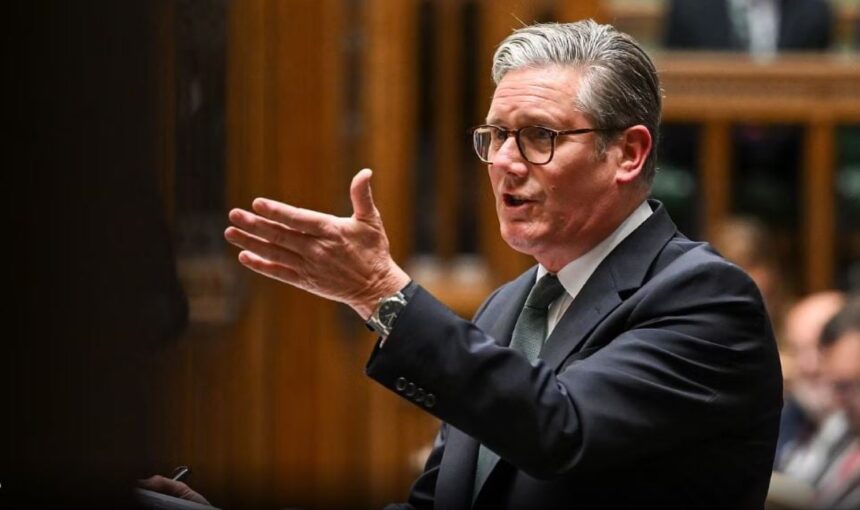
Facing the most severe leadership crisis of his tenure, British Prime Minister Keir Starmer has defiantly rejected claims that his political authority is broken. In his first public comments following a explosive cabinet mutiny, Starmer declared he has absolute zero intention of resigning and is fully prepared to fight any internal coup to retain control of Downing Street.
The Prime Minister’s high-stakes gamble comes less than 24 hours after the abrupt, damaging resignation of Defence Secretary John Healey, an exit that has exposed deep, structural civil-military rifts within the British government over defense spending during a time of heightened European instability.
1. The Cabinet Mutiny: John Healey’s Exit
Healey’s resignation has shattered the illusion of cabinet unity, triggering immediate speculation that a coordinated challenge against Starmer’s leadership is actively being organized within the Labour ranks.
The Anatomy of the UK Cabinet Crisis

 [ THE RESIGNATION TRIGGER ] ──► BUDGET DEFICITS
 • Defence Secretary John Healey resigned after accusing Starmer of failing to
   secure the critical financial resources required for national defense.

 [ THE FISCAL CONFLICT ] ──► HARD INVESTMENT CEILINGS
 • Healey argued that the Treasury's rigid spending caps are actively
   undermining military readiness and crippling strategic modernization plans.

 [ THE LEADERSHIP CHALLENGE ] ──► SPECCULATION OF A COUP
 • The high-profile departure has emboldened internal rivals, setting off
   immediate maneuvers for a potential vote of no confidence.
“I am not leaving. Anyone who thinks they can step into this role and instantly solve these issues will face the exact same economic and fiscal constraints. I am entirely ready to confront any rival who attempts to challenge my leadership.”
— Keir Starmer, Prime Minister of the United Kingdom
2. The Defense of Austerity: Starmer’s Fiscal Realism
Faced with accusations that he is neglecting national security, Starmer strongly defended his government’s budgetary framework. He insisted that defense remains his administration’s absolute top priority, but argued that national security cannot be separated from macroeconomic stability.
The Prime Minister's Economic Defense Grid
┌────────────────────────────────────────────────────────────────────────┐
│                                                                        │
│  [ THE SYSTEMIC FISCAL REALITY ] ──────────────────────────────────┐   │
│  • The UK is operating under severe structural economic constraints,    │   │
│    leaving no room for unbacked, debt-fueled spending sprees.          │
│                                                                        │   │
│  [ CANNIBALIZING CIVIL SECTORS ] ──────────────────────────────────┤   │
│  • Starmer revealed that the cabinet has executed painful, unpopular   │   │
│    cuts across social and domestic departments to shield the defense budget.│
│                                                                        │   │
│  [ THE HARD COLD BUDGETARY FACT ] ─────────────────────────────────┘   │
│  • Downing Street maintains that military funding *is* increasing, but  │
│    unrealistic funding demands from defense chiefs will not override fiscal rules.│
│                                                                        │
└────────────────────────────────────────────────────────────────────────┘
3. Geopolitical Consequences: A Fragile Pivot for Westminster
The public civil-military breakdown at Whitehall comes at a precarious geopolitical moment, as international allies look to the UK to maintain a robust, predictable military posture.
| Resigning Position (Healey) | Starmer’s Executive Stance | Immediate Political Risk |
| “Underfunded Frontlines.” Asserts that current defense allocations leave the UK structurally vulnerable to emerging global threats. | “Responsible Investment.” Claims defense spending is targeted and efficient, matching real-world capabilities with strict fiscal responsibility. | Whitehall Paralysis. A protracted, bitter internal leadership fight could completely derail defense procurement cycles and weaken the UK’s standing within NATO. |
With Westminster locked in crisis mode and opposition factions smelling blood in the water, Starmer’s political survival now hinges on his ability to hold his parliamentary party in line over the coming days while rapidly appointing a loyalist successor to the Ministry of Defence.