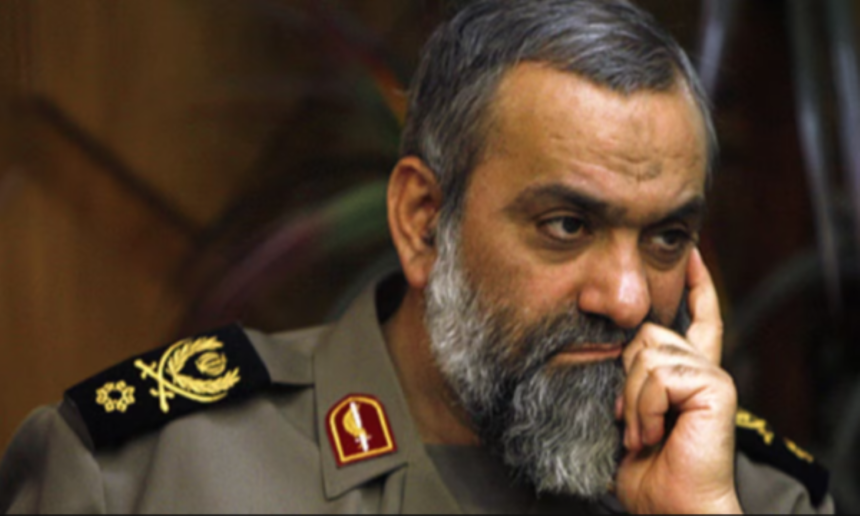
Iran could seek to “prolong” its war with the United States until President Donald Trump leaves office, a senior adviser to the commander of Iran’s Islamic Revolutionary Guard Corps (IRGC) has said, according to CNN.
Mohammad Reza Naqdi, a senior adviser to the IRGC commander and a former senior coordination official within the force, made the remarks in an interview with PBS published Tuesday.
“We need to achieve deterrence, so that the enemy never dares to attack us, so that we can live safely,” Naqdi said. “One way is to prolong this war until we reach the next presidential term and cause attrition, so that if someone else wants to attack Iran, they know there will be a cost.”
Naqdi served as the IRGC’s deputy coordinator from 2019 to 2025, a senior position responsible for coordination across the organization. He now serves as a senior adviser to the IRGC commander, a role with less direct operational authority but likely continued access to the organization’s senior leadership.
Asked whether he believed Iran currently had control of the war, Naqdi responded: “Of course, victory is on our side.”
He accused Washington of fighting a war “without a strategy,” arguing that the United States had repeatedly announced new objectives, including taking control of Kharg Island and reopening the Strait of Hormuz.
“The longer this war lasts, the more experience we gain,” Naqdi said. “We had never seen a real war to gain real experience and learn how to fight America. During these five months, we have learned how.”
He also claimed that the U.S. military was weaker than Iran had previously believed.
Iran threatens continued pressure in the Strait of Hormuz
Naqdi also discussed Iran’s attacks on vessels in the Strait of Hormuz, suggesting that ships traveling through areas not controlled by Iran could be considered potential targets if Tehran believed they were carrying supplies for its adversaries.
“If ships are traveling through an area that is not under Iran’s control, it may be that they are transporting supplies for the enemy,” he said.
His comments underline the strategic importance of the Strait of Hormuz, one of the world’s most important energy corridors, and signal that Tehran could continue using pressure on maritime traffic as part of its broader strategy against Washington.
Naqdi also claimed that Iran is producing more missiles than it uses on a daily basis, suggesting that Tehran believes it can sustain a prolonged missile campaign.
“If a day comes when Iran has no more missiles, then we will be even more dangerous for America,” he said, arguing that the United States has thousands of economic interests around the world that could potentially be targeted.
The remarks represent one of the clearest indications from a senior IRGC-linked figure that Tehran could view a prolonged confrontation with Washington as a strategy of attrition rather than seeking a rapid resolution.
Naqdi’s comments do not necessarily represent an official decision by Iran’s political or military leadership, but they offer insight into how some senior figures within the IRGC may view the conflict and the possibility of sustaining pressure on the United States until a change in the White House.