Irlanda will assume the six-month rotating presidency of the Council of the European Union (EU) on July 1, 2026. This half-year period is poised to be highly significant for the bloc’s enlargement strategy for several key reasons.
While Montenegro could potentially conclude its membership talks under Irish leadership—putting it on track to become the 28th EU member state by 2028—Kosovo is not expected to feature on the agenda at all.
Meanwhile, Ukraine, Moldova, and Albania are expected to maintain their forward momentum toward accession, alongside potential progress for Iceland and Serbia.
The Return of Dublin’s “Honest Broker” Legacy
There is considerable interest in Ireland taking the helm at this specific juncture. Dublin famously held the rotating presidency during the historic 2004 “Big Bang” enlargement, welcoming eight Central and Eastern European nations alongside Cyprus and Malta.
Irish diplomats speaking to Radio Free Europe (RFE) noted that this period is still remembered with great nostalgia on the island, and domestic polls consistently show that Irish citizens remain highly supportive of expanding the bloc.
In Brussels, Ireland is viewed as an “honest broker” on enlargement—one of the few member states whose government has never vetoed an expansion milestone or engaged in bilateral disputes with any candidate country.
Kosovo and Other Nations Stalled at a Standstill
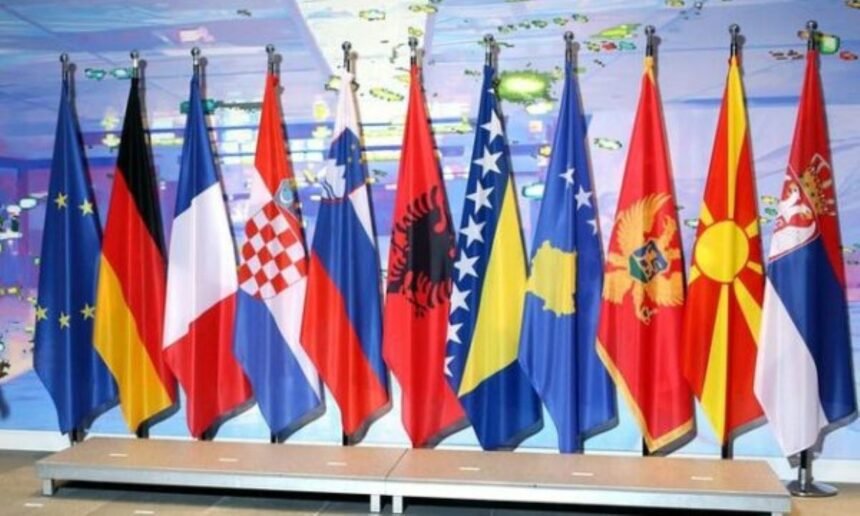
While several candidate states are seeing rapid momentum, four countries are projected to remain stagnant: Kosovo, Bosnia and Herzegovina, Georgia, and North Macedonia.
EU Enlargement Outlook Under Irish Presidency (H2 2026)
========================================================================
Fast-Tracking Status:      Montenegro (Targeting 2028 entry), Albania
Progress Expected:         Ukraine, Moldova, Iceland (Referendum pending)
Stalled / Frozen:          Kosovo, Bosnia & Herzegovina, North Macedonia, Georgia
========================================================================
Kosovo continues to face a long-standing diplomatic hurdle. Despite submitting its formal EU membership application in late 2022, the request has still not been forwarded to the European Commission for assessment. Five EU member states—Cyprus, Greece, Romania, Slovakia, and Spain—do not recognize Kosovo’s independence and refuse to advance the application.
Ireland is expected to test the diplomatic waters with these five nations. The last country to try was Sweden in early 2023, but Stockholm’s efforts were largely ignored, particularly by Madrid. Few in Brussels anticipate a breakthrough in the coming months.
- Bosnia and Herzegovina: Internal political gridlock has prevented Sarajevo from appointing a chief negotiator for EU talks. Additionally, two crucial judicial reform laws demanded by Brussels remain unpassed.
- North Macedonia: Required constitutional amendments to officially recognize the country’s Bulgarian minority have stalled with no resolution in sight.
- Georgia: The European Commission currently considers Georgia a candidate country “in name only.” Following intense friction with Brussels, the government in Tbilisi has effectively suspended all accession efforts until 2028.
Montenegro: The 28th Member by 2028?
Montenegro has firmly established itself as the frontrunner in the accession race. The small Western Balkan nation has successfully closed 16 out of 33 negotiating chapters (the specific policy areas a candidate must align with EU law).
Podgorica aims to close the remaining 17 chapters during the Irish presidency. Irish Taoiseach Micheál Martin visited Montenegro in early June during the EU-Western Balkans summit, noting that while finishing everything in six months would be “challenging,” it remains Dublin’s target.
The Ratification Runway: To meet the 2028 accession target, Montenegro must finalize all technical negotiations by late 2026 or early 2027. This timeline accommodates the year-plus required for all 27 existing EU member states to formally ratify the accession treaty.
A specialized working group in Brussels has been quietly drafting Montenegro’s EU Accession Treaty since May, and EU officials report the process is moving ahead smoothly.
Progress Across the Rest of the Continent
Albania Inches Closer
Cyprus may close the first chapters with Albania by late June; if not, Ireland will pick up the mantle in July. After swiftly opening chapters throughout 2024–2025, Tirana had been held up by the “interim benchmarks” for Chapters 23 and 24, which govern the rule of law.
Having cleared these hurdles at the end of May, Albania is now positioned to quickly close three key policy chapters: science and research, education and culture, and external relations.
Serbia and Iceland Testing the Waters
- Serbia: Eager not to fall behind its neighbors, Belgrade is pushing to kickstart its stalled process, which has seen little movement since late 2021. Rumors suggest France is advocating to open an entire cluster of economic and competitiveness chapters as early as July. However, Baltic states remain wary of Belgrade’s refusal to align with EU sanctions against Russia, while the Netherlands continues to flag serious concerns regarding Serbia’s domestic rule of law.
- Iceland: In a fascinating historic twist, Iceland—which suspended its 2009 EU application mid-negotiation in 2013 during a previous Irish presidency—is scheduled to hold a national referendum in late August to decide whether to resume talks. If Icelanders vote “Yes,” Ireland will once again be at the helm to welcome them back to the negotiating table.