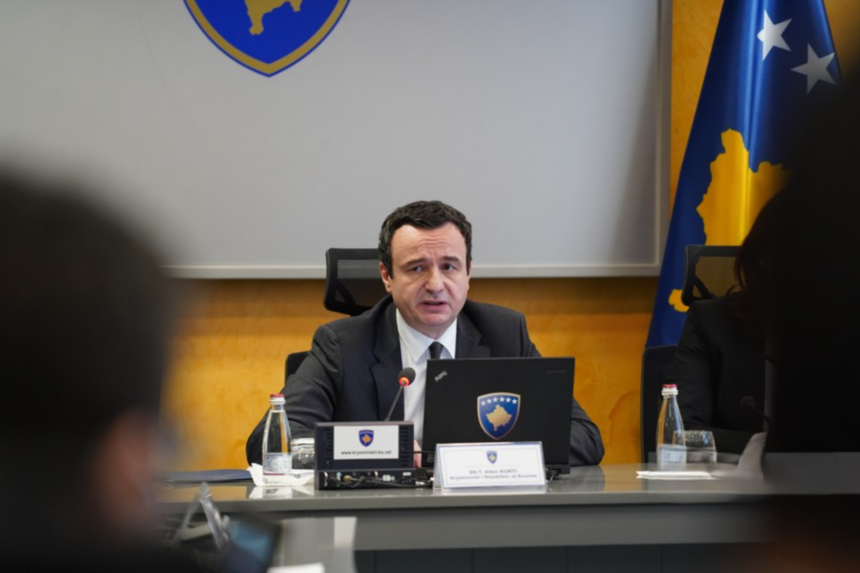
At the opening of today’s government cabinet session on June 24, 2026, Kosovo’s Prime Minister, Albin Kurti, announced a major judicial breakthrough: five former members of the Serbian police force have been arrested for their alleged roles in the notorious 1999 Reçak Massacre.
The coordinated arrests come directly on the heels of an intensive six-month targeted investigation by local special prosecutors. While praising law enforcement for the breakthrough, Kurti unleashed heavy political criticism against past administrations and international missions, stating that the state completely ignored the case for more than two decades until his party took power.
Decades of Judicial Failure vs. Active Prosecution
The Reçak Massacre of January 15, 1999—in which 45 ethnic Albanians were executed by Serbian security forces—was the pivotal event that triggered the NATO military intervention. Despite its immense historical and legal weight, Kurti highlighted a staggering gap in institutional effort before 2020.
The Judicial Timeline of the Reçak Case:
========================================================================
1999 – 2020  -->  EULEX compiles thousands of conflict case files, but
                  leaves ZERO open files regarding the Reçak Massacre.
------------------------------------------------------------------------
2020         -->  Kurti's administration takes office; begins structural
                  reforms to prioritize war crimes prosecutions.
------------------------------------------------------------------------
Late 2025    -->  Special Prosecutors launch a focused, 6-month investigation.
------------------------------------------------------------------------
June 2026    -->  Five former Serbian police officers officially arrested.
========================================================================
“Witnesses Are Aging and Dying”
Addressing his cabinet ministers, Kurti emphasized the extreme urgency facing Kosovo’s war crimes investigators as nearly three decades have passed since the end of the conflict.
Albin Kurti at the Cabinet Meeting: ““While we congratulate our institutions for the arrest of these suspects after a six-month investigation, we cannot ignore the fact that until 2020, absolutely no one dealt with this case. Out of the thousands of war crimes documents handed down by EULEX, not a single one was dedicated to Reçak. On one hand, we have an arrest after six months of real work, and on the other, more than two decades of systemic failure and zero commitment to justice.””
Kurti concluded by issuing a stark warning regarding the biological clock ticking against historical accountability. He noted that as the years advance, surviving victims and eyewitnesses are rapidly aging and passing away, meaning the state must aggressively accelerate trials in absentia and localized investigations to secure justice for families before the living memory of the massacres is lost entirely.