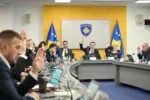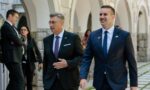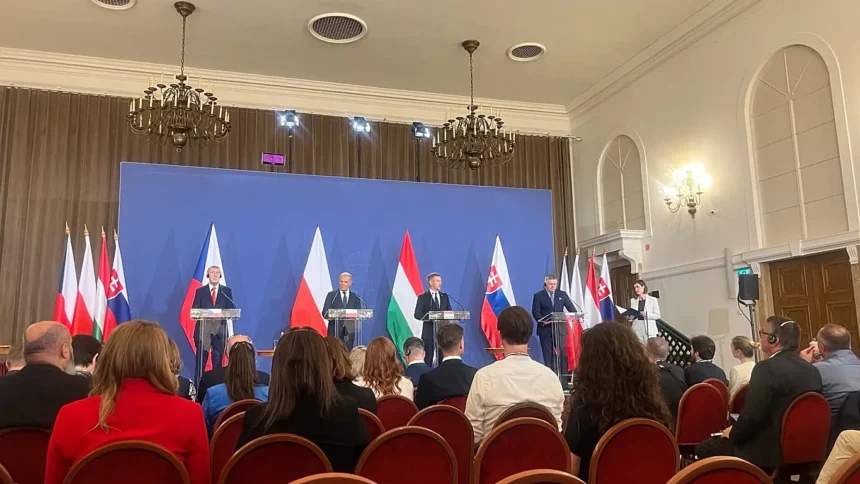
In a major geopolitical reset for Central Europe, Hungarian Prime Minister Péter Magyar opened a high-profile joint press conference at the Grassalkovich Palace today, June 24, 2026, by quoting his Polish counterpart Donald Tusk: “The V4 is back.”
The summit marked a dramatic turning point for the Visegrád Four alliance—comprising Hungary, Poland, the Czech Republic, and Slovakia—which had long been fractured by the previous Hungarian administration’s pro-Russian stances. Under the freshly energized leadership of Péter Magyar, the four heads of government signaled a complete return to mutual loyalty, intense economic solidarity, and a unified Central European front capable of dictating terms in Brussels.
A Unified Front for the EU Budget and Infrastructure
The summit, which coincided with the 35th anniversary of the V4’s founding, focused heavily on leveraging Central Europe’s position as one of the European Union’s most dynamically developing regions.
Magyar, alongside Polish PM Donald Tusk, Czech PM Andrej Babiš, and Slovak PM Robert Fico, successfully revived the historical tradition of coordinating their political strategies ahead of major EU summits.
The Remodeled V4 Strategic Agenda (June 2026):
========================================================================
Pillar 1. COHESION & CAPITAL --> Total alignment on protecting the EU's next
                                 seven-year budget, agricultural policies, and cohesion funds.
------------------------------------------------------------------------
Pillar 2. INFRASTRUCTURE     --> PM Magyar introduces a mega-proposal for a
                                 high-speed rail link connecting Warsaw, Prague, Bratislava, and Budapest.
------------------------------------------------------------------------
Pillar 3. ANKARA NATO SUMMIT --> Coordinated alignment on defense strategy ahead
                                 of the highly volatile upcoming NATO Summit in Ankara.
========================================================================
Slovakia’s Presidency: Tackling Migration and Energy Inflation
Slovak Prime Minister Robert Fico outlined the core priorities of Slovakia’s incoming V4 presidency, emphasizing that the bloc represents a powerful constituency of 65 million European citizens.
Fico identified illegal migration as a primary pressure point where the V4 has historically achieved its greatest unified successes and promised strict border enforcement coordination.
The Energy Crisis: Citing Mario Draghi’s economic report, Fico branded sky-high electricity prices as Europe’s greatest threat to competitiveness. He slammed the EU’s current climate targets as counterproductive, pointing to the collapse of Slovakia’s domestic aluminum production—which was priced out by energy costs—only to be replaced by high-pollution imports from China. “There was more hand-wringing than substance in recent Brussels debates on China,” Fico warned.
“Europe’s Future”: Chemistry and Power Dynamics Resumed
The summit stood out for its remarkably warm and unified tone, a sharp contrast to the cold isolation that characterized Budapest’s regional standing in recent years.
- The Czech Optimism: Prime Minister Andrej Babiš expressed immense confidence in the bloc’s newly restored diplomatic alignment. ““I am certain we will cooperate perfectly—there is real chemistry between us,”” Babiš stated, defiantly declaring that “these four countries are Europe’s future.”
- The Polish Endorsement: Donald Tusk openly credited Péter Magyar’s political energy as the primary catalyst for the V4’s dramatic renewal. Tusk underscored that when the V4 acts with true internal solidarity, France and Germany are forced to listen. ““The V4 will be one of the greatest powers too,”” Tusk asserted, while playfully quipping that Babiš’s direct communication style seemed borrowed straight from Donald Trump’s playbook.
By closing the Gödöllő summit with a concrete commitment to block-wide infrastructure and shared economic defense, the new generation of V4 leaders has sent a clear message to Western Europe: Central Europe will no longer be a fragmented bystander, but a consolidated powerhouse ready to actively shape the future of the Union.