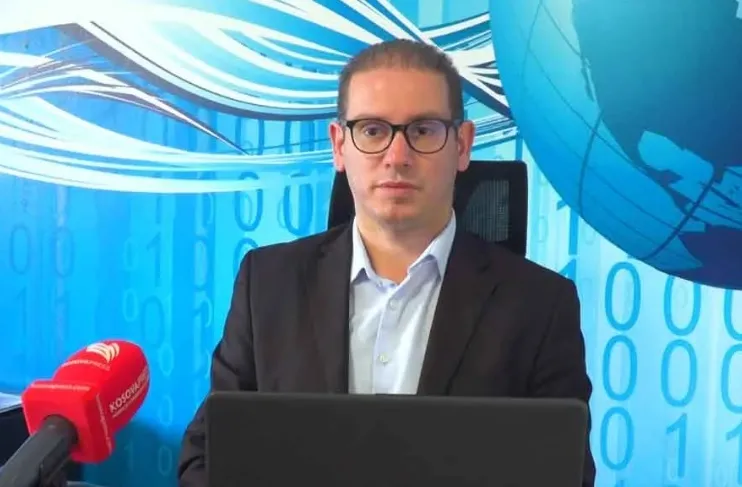
Kosovo security expert Gurakuç Kuçi has rejected claims that efforts to locate people who disappeared during the Kosovo war are being politically exploited, arguing that the search for the missing is fundamentally an effort to uncover and document crimes.
Kuçi made the comments in response to renewed calls from families of missing persons and international organizations for greater efforts to determine the fate of those who remain unaccounted for and for the opening of archives that could contain information about their whereabouts.
“The search for the missing is not politicization. It is the clarification of a crime,” Kuçi said.
More than 1,500 people who disappeared during the Kosovo war are still missing, while families continue to demand access to information that could help identify mass graves and locate the remains of their relatives.
According to Kuçi, demands for the search and identification of missing persons have been met with a different narrative from Belgrade.
He said the Serbian Office for Kosovo has described the process as political exploitation, while some Serbian political figures have linked efforts to clarify the fate of missing persons to what they describe as attempts to challenge the narrative surrounding Serbia’s role in the wars of the 1990s.
Kuçi argued that such claims go beyond criticism of Kosovo institutions.
“This is not simply opposition to Kosovo’s institutions. It is a calculated attempt to relativize the responsibility of the Serbian state,” he said, arguing that the narrative seeks to influence how the wars of the 1990s are interpreted.
The security expert stressed that the discovery of human remains, forensic examinations and the documentation of victims cannot themselves be described as propaganda.
“Propaganda is the attempt to use these discoveries to rewrite the truth of history,” Kuçi wrote, referring to recent discoveries of human remains in the Zubin Potok area.
Kuçi said the process of locating missing persons must remain focused on establishing facts, identifying victims and determining responsibility for crimes committed during the war.
He also raised the broader question of whether genuine reconciliation can be achieved without resolving the fate of those who remain missing and acknowledging responsibility for crimes.
“Can there be reconciliation without finding the last body and without accepting responsibility?” Kuçi asked.
The issue of missing persons remains one of the most painful unresolved consequences of the Kosovo war, with families continuing to wait decades later for information about the fate and whereabouts of their relatives.