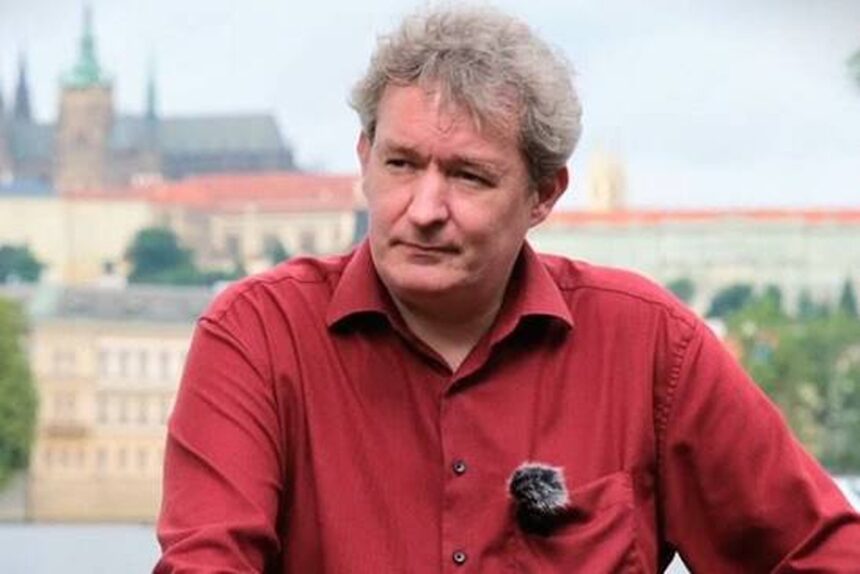
German journalist Michael Martens of Frankfurter Allgemeine Zeitung has published an analysis of the Serbian student movement’s foreign policy platform, arguing that its positions on Kosovo, Russia and the region align with the Serbian nationalism promoted by President Aleksandar Vučić and the Serbian Progressive Party (SNS).
In a series of eight posts on X, Martens wrote that although domestic issues largely determined the outcome of Serbia’s parliamentary elections, foreign policy would pose a significant challenge for the new government.
According to Martens, the student movement’s platform represents a document of Serbian nationalism and political backwardness, and implementing it would inevitably fuel conflict in the region.
Martens emphasized that the student movement not only refuses to recognize Kosovo’s independence but also appears unwilling to accept its statehood as a political reality.
He recalled that Serbia’s Constitution includes a claim to Kosovo in its preamble, but argued that the students’ platform goes further, creating the impression that Belgrade could act as it pleases throughout Kosovo’s territory.
“The platform states that Serbia will ‘fight for Kosovo’ so that it remains part of Serbia, but it does not explain how this ‘fight’ would be carried out,” Martens wrote.
He noted that the platform refers to Kosovo as the “so-called Republic of Kosovo,” terminology also used by Vučić and his party. The German journalist also highlighted the student movement’s position on the agreements reached between Kosovo and Serbia in 2023 under European Union mediation.
“The movement apparently wants to reverse even what has already been achieved. Referring to the previous government and the Serbia–Kosovo agreement on normalizing relations between Belgrade and Pristina, reached in 2023 under EU mediation, the platform states: ‘We will prosecute all representatives responsible for any acts related to the conclusion and implementation of unconstitutional agreements that are detrimental to Serbia,’” Martens wrote.
Martens also pointed out that the platform does not recognize Kosovo’s institutions as democratically elected authorities, instead describing them as “provisional institutions of self-government in Pristina.”
He also questioned the platform’s description of the University of Serbia in North Mitrovica as provisional, asking whether the movement intended to relocate it to Pristina without consulting Kosovo’s institutions.
In his analysis, Martens wrote that the student movement intends to rely on Serbia’s “traditional partnership” with Russia to resolve outstanding issues considered to be of mutual interest.
According to Martens, the platform opposes sanctions against Moscow and envisages maintaining Serbia’s position of refusing to impose restrictive measures on the Russian Federation.
At the same time, the movement seeks to expand its strategic partnership with China, particularly in the areas of the economy, infrastructure and high-tech investment.
Martens also noted that the students had attended nationalist gatherings marking the anniversary of the 1389 Battle of Kosovo but remained silent on the anniversary of the Srebrenica genocide, committed by Bosnian Serb forces in 1995.
In his view, these positions demonstrate that this generation has absorbed more of the nationalist atmosphere cultivated during Vučić’s 12 years in power than it may realize.
In conclusion, Martens stressed that an election platform does not necessarily mean every promise will be implemented, leaving open the possibility that the student movement could adopt a more pragmatic approach once in power. However, he warned that if the platform were put into practice, Croatia, Montenegro, Kosovo and the Bosniak-majority population in Bosnia and Herzegovina could unite in some form of cooperation against Serbia.
“The result would not be Serbia’s liberation, but its isolation,” the German journalist wrote.
He stressed that Serbia’s refusal to recognize Kosovo’s independence is a choice made by Serbia itself, but that any attempt to restore Serbian control over Kosovo would require war.
“But to restore Serbian control over Kosovo, the Serbs would have to go to war. And they would almost certainly lose that war. Again,” Martens concluded.