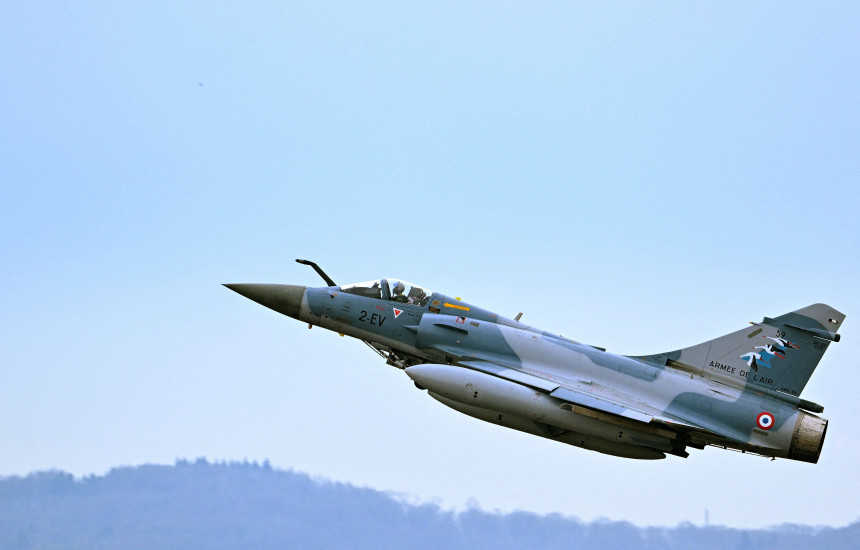
In a direct response to a dangerous escalation of airspace violations across the Baltic region, Poland will urgently deploy its frontline fighter aircraft to Estonia.
The defense package was finalized on Thursday during a high-stakes bilateral summit in Tallinn between Polish Deputy Prime Minister and Minister of National Defence Władysław Kosiniak-Kamysz and his Estonian counterpart, Hanno Pevkur. The Polish fighter jets will operate directly out of the newly modernized Ämari Air Base in Estonia, plugging critical security gaps exposed within NATO’s Baltic Air Policing mission.
The Baltic Gridlock: Russian Electronic Warfare Redirection
The rapid deployment follows a series of unprecedented and highly volatile military incidents over the past week, which have pushed Baltic civilian and military structures onto a wartime footing.
   [THE BALTIC DRONE INCURSION TIMELINE - MAY 2026]
   • May 19 (Estonia):  A long-range strike drone is intercepted and shot down over Lake Võrtsjärv.
   • May 20 (Lithuania): Red Alert sirens sound in Vilnius. Senior leadership takes shelter in underground bunkers.
   • May 20 (Latvia):    Air raid warnings active in districts bordering Russia for 48 consecutive hours.
While Ukraine’s Foreign Ministry has issued formal diplomatic apologies to Estonia for the unintentional airspace penetrations, Kyiv and Baltic intelligence agencies have identified the root cause: intensive Russian electronic warfare (EW) networks operating out of Kaliningrad and Belarus. Russian jamming arrays are aggressively spoofing GPS guidance codes, hijacking the flight paths of Ukrainian long-range strike drones bound for mainland Russia, and deliberately steering them into NATO sovereign territory.
These dynamic diversions have led to multiple severe friction points in recent weeks:
- Estonia: A stray drone crashed directly into the chimney stack of a major domestic thermal power plant.
- Latvia: Multiple deep-penetration drones struck empty civilian fuel storage facilities.
- Lithuania: Romanian fighter jets operating under a NATO mandate were forced to scramble and down multiple targets near the Belarusian border.
Warsaw’s Firm Warning to Kyiv: Precision Over Pretext
During a joint press conference in Tallinn, Kosiniak-Kamysz did not hold back. While reaffirming Poland’s unwavering solidarity with Ukraine’s war effort, he issued an explicit public warning to military planners in Kyiv, urging them to achieve absolute technical precision in their cross-border targeting.
   [THE TRIPLE STRATEGIC THREAT]
   Unintended Flight Paths ──> Breach of NATO Sovereign Airspace ──> Russian Provocation Pretext
“Undoubtedly, Ukraine must define its strike targets much more precisely, so as not to create a threat to the security of Alliance countries,” Kosiniak-Kamysz stated firmly. “Ukraine must be more careful here, of course, to avoid giving rise to Russian provocations. Our territories should not be violated, and they must not be subjected to threat. Imprecise targeting serves Russian hybrid warfare and can be easily weaponized by the Russian Federation for escalation and propaganda.”
The Five-Percent Vanguard and the U.S. Footprint
The defense integration between Warsaw and Tallinn marks a broader structural transformation on NATO’s eastern flank. Both Poland and Estonia have formally committed to a historic benchmark, raising their national defense budgets to 5% of their respective GDPs—setting a severe spending example for Western European allies.
The two nations are actively lobbying Brussels for immediate joint European Union financing to establish Eastern Flank Watch, a multi-billion-euro integrated anti-drone and air defense wall spanning the Baltic-Polish border.
Kosiniak-Kamysz concluded the defense brief by confirming that despite recent transatlantic friction regarding the redirection of U.S. troops to the Middle East, a definitive, final bilateral agreement determining the permanent deployment and rotation frameworks of American ground and armored forces in Poland will be formally signed and locked in within the next two weeks.