The narrative of Belgrade’s propaganda in Switzerland fails: Parliament votes to increase troops in Kosovo, while Kosovo’s ambassador accuses the Serbian ambassador of lies.
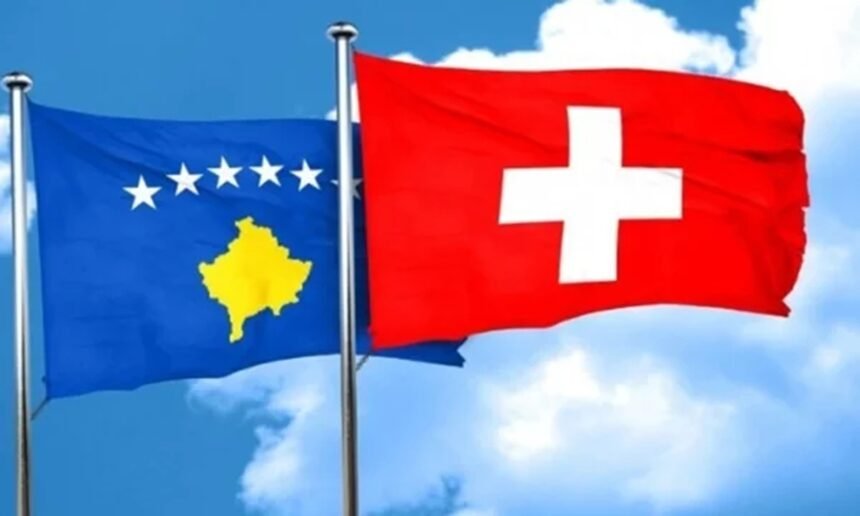
The Parliament of Switzerland voted on Thursday by a significant majority to extend the Swiss military mission within the KFOR mission in Kosovo until 2029, also approving an increase in the number of Swiss soldiers to 300. This decision was taken to fill security gaps in the Balkans created by the redeployment of European troops toward NATO’s eastern flank and Ukraine.
However, behind the scenes, a propaganda and lobbying operation by Serbia within the Swiss Parliament has been revealed. According to the newspaper Neue Zürcher Zeitung, before the parliamentary debate began, the Swiss People’s Party (SVP) – which was the only party opposing the presence of Swiss troops in Kosovo – was directly supplied with propaganda documents from Belgrade.
The key link in this chain turned out to be SVP MP Christian Imark. During the session, Imark took the floor and claimed that the Serbian minority in northern Kosovo is facing human rights violations.
He provocatively asked the Minister of Defense, Martin Pfister, whether the government had received the list of alleged violations and what Switzerland was doing about the situation.
This list of claims and complaints had been distributed to Swiss parliamentarians by Ivan Trifunović, the Ambassador of Serbia to Switzerland. Trifunović, previously known as an aggressive Serbian lobbyist in the United States, attempted to use the same methods in Bern. He openly accused the government of Kosovo’s Prime Minister Albin Kurti of systematic oppression of Serbs, drawing an absurd comparison with the events of 1999 and stating for NZZ that if this suffering does not end, there can be no peace.
Kosovo’s Ambassador to Bern, Mentor Latifi, rejected these claims, describing Serbia’s comparison as a complete mockery and a blatant lie. Latifi reminded that Kosovo is a country where international peace missions such as the OSCE are stationed, making any claim of systematic oppression impossible. Kosovo is prospering and on a path of success, and this is precisely what bothers Belgrade.
Furthermore, Ambassador Latifi argued that NATO’s presence remains necessary due to Serbia’s destructive role in the region and particularly toward Kosovo. As undeniable evidence, he referred to the autumn 2023 attack, in which an armed Serbian group barricaded themselves in an Orthodox monastery, during which a Kosovo police officer was killed and, in response, three Serbian terrorists were neutralized.
Latifi emphasized that the Banjska attack was a terrorist attack organized by Serbia itself, adding that the attackers’ modern military equipment leaves no doubt about Belgrade’s involvement.
In his analysis, Latifi warned Swiss politicians that Serbia’s real goal is to provoke the withdrawal of all peacekeeping forces so that Kosovo would be left unprotected against its aggressive neighbor. Regarding minority rights, he stated that Kosovo is making maximum efforts to integrate Serbs. However, people there are caught between two pressures, as the Kosovo government pushes integration forward while official Belgrade blocks this process.
In conclusion, the arguments of the Kosovar side and the necessity of stability in the Balkans – also supported by Swiss Defense Minister Martin Pfister – convinced the Swiss Parliament to reject the propaganda of the Trifunović–Imark duo and vote in favor of maintaining and strengthening the Swiss Armed Forces in Kosovo.
The Embassy of Serbia has consistently used a statement by the Mayor of Peja, Gazmend Muhaxheri, who is quoted by the Serbian side as having said that the Kosovo government is treating the Serbian community like Slobodan Milošević’s regime treated Albanians in the 1990s.
A few days earlier, Jovana Radosavljević was in Bern. She has been a long-time civil society activist in northern Kosovo and, in the last elections, ran for the Serb List. The Serbian Embassy also organized a meeting between Radosavljević and Swiss MPs, where she spoke about alleged human rights violations against Serbs in Kosovo.
Among the MPs present during Radosavljević’s presentation was Swiss MP Christian Imark from the SVP party. This party has for decades conducted a harsh campaign against Albanians in Switzerland. Some of its leaders have been convicted by Swiss courts for racism against Albanians. Politicians from this party and the magazine Weltwoche, which is close to the SVP, continuously attack the Albanian community.