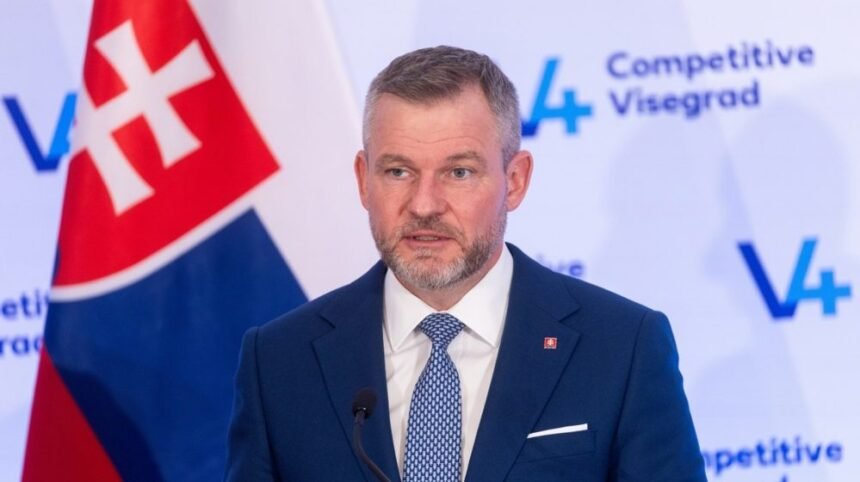
Slovak President Peter Pellegrini stated on Sunday that the incident which occurred in August in Bački Petrovac was the result of political differences, stressing that no one deliberately targeted members of the Slovak minority.
Speaking to reporters in Belgrade after a meeting with Serbian President Aleksandar Vučić, Pellegrini said the incident stemmed from conflicting political views, not ethnic hostility.
“Some Slovaks support the Serbian Progressive Party (SNS), while others do not. I cannot interfere in that. These are internal political matters,” Pellegrini said.
He added that he would visit Bački Petrovac on Monday to speak with members of the Slovak community about language, culture, and history, emphasizing that his visit should not be linked to Serbia’s internal politics.
President Aleksandar Vučić also said the incident had nothing to do with ethnicity, stating that no one in Serbia holds hostility toward Slovaks. According to Vučić, the clash involved two opposing political groups, while some media outlets exaggerated the events.
Background of the Incident
The incident took place on August 9, when activists of the Serbian Progressive Party, led by local officials, attempted to prevent a photo exhibition depicting protests across Vojvodina. The exhibition, organized by informal groups of ethnic Slovaks, was intended as part of the Slovak National Festivities.
Despite police presence, all displayed photographs were torn down, and after police withdrew, a physical altercation broke out, leaving several citizens injured, including military veterans.
Strong Serbia–Slovakia Relations and EU Support
During his visit, Pellegrini emphasized that relations between Serbia and Slovakia are very strong, noting that Serbia is Slovakia’s most important economic partner in the region. He reaffirmed Slovakia’s support for Serbia’s path toward European Union membership.
“Slovakia is a friend of the Western Balkans, and Serbia is a key factor for stability and peace in the region,” Pellegrini said.
He criticized delays in opening Cluster 3 in Serbia’s EU accession talks, calling them a “political game”, and warned that unfair treatment could weaken public support for EU integration in the Western Balkans.
Support for the Slovak Minority in Serbia
Pellegrini also expressed gratitude to Serbia for its readiness to financially support the Slovak community in Vojvodina, including plans to build a Slovak Cultural Center, a project worth several million euros.
“This is a significant gesture that the Slovak community could not achieve on its own,” he said.
The Slovak president reiterated that his visit focuses solely on preserving language, culture, education, and identity, not on addressing internal political disagreements within the minority.