The strategy of forcibly disappearing victims during the Kosovo war began as early as May 1998 and would leave hundreds of families across the Prishtina region searching for answers that, even after 26 years, have still not come.
Today, 185 people remain missing in the municipalities of Prishtina, Podujeva, Lipjan, Obiliq, and Graçanica. They are part of the 1,560 people who are still missing from the 1998–1999 Kosovo war.
Statistics show that around 10% of Albanian victims were later discovered in mass graves in Serbia, while more than 12% of all war victims remain missing to this day.
The war transformed entire communities into crime scenes. In areas such as Sllovi, Makovc, Fushë Kosova, and Podujeva, civilians were abducted, killed, secretly buried, or transferred to still unknown locations.
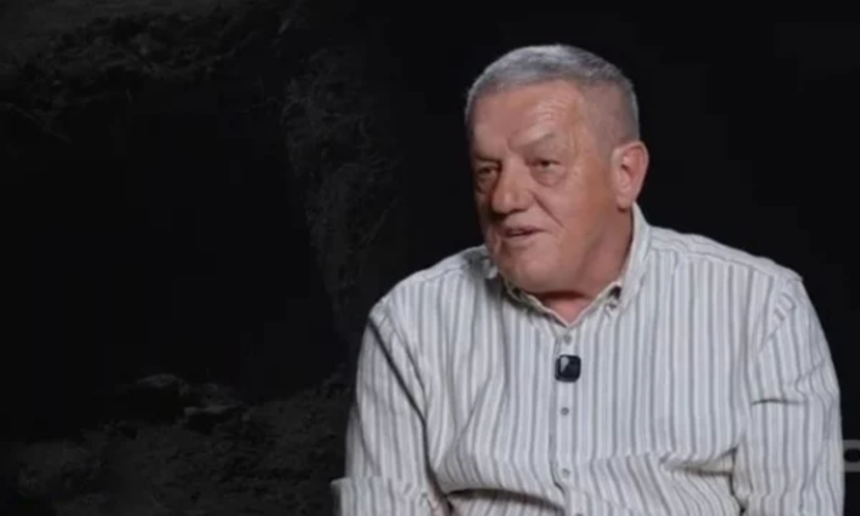
Adem Zogiani recalls the disappearance of his twin brother, Hysen, on June 22, 1998.
“He received a phone call and said, ‘I’m coming.’ Maybe he was lured into a meeting somehow… He left the apartment by car and told his wife, ‘I’ll just get some tomatoes and peppers and come back quickly.’ But he never returned,” Adem recounts.
In April 1999, the village of Sllovi near Lipjan became one of the sites where massacres and forced disappearances were carried out simultaneously.
Feriz Gërbeshi, whose mother was killed and disappeared during the war, remembers the attack on the village:
“On April 14, 1999, Sllovi was surrounded by regular Serbian military forces with tanks. Twenty-four people were killed during the siege. Houses were burned, and killings began one after another.”
Witnesses say local Serbian paramilitary structures participated alongside Serbian military forces in the attacks.
Enis Gashi, whose father, grandfather, and uncle were killed, still remembers the final moments he saw them alive.
“They were lined up beside a tree in our yard. My father, my uncle Enver, Arben, Bekim, and my grandfather Murat… The gunshots are something you never forget. It feels as if it happened today.”
After the war ended, around 6,500 people were initially listed as missing across Kosovo. Morgues were overwhelmed with bodies, while forensic teams worked to identify victims and uncover mass graves.
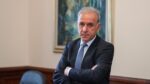
Former Director of Kosovo’s Institute of Forensic Medicine, Arsim Gërxhaliu, described the horrific conditions in the aftermath of the war.
“There was barely space to walk. Bodies had started decomposing. Families kept coming, searching for their loved ones, without knowing where they were.”
Investigators discovered victims buried in mass graves, hidden in open excavator trenches, or transferred to Serbia in efforts to conceal the crimes.
For many families, the suffering continued long after the war. Some became victims of cruel scams, paying thousands of euros to people falsely claiming they could help locate missing relatives.
Naser Mirena, whose two brothers were killed and disappeared, recalls receiving phone calls from individuals demanding money in exchange for information.
“They asked if I wanted my brothers brought to Slovenia or Italy. They demanded 30,000 German marks. The moment I realized it was deception, the phone calls stopped forever.”
For the families of the missing, the war never truly ended. Beyond the statistics are lives interrupted, families destroyed, and decades spent between hope and uncertainty.
Even today, the search for truth and justice continues.