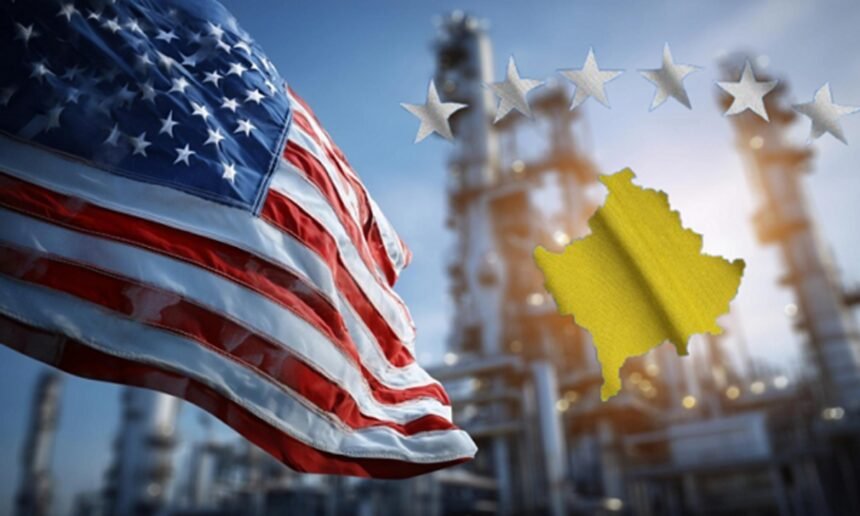
The United States has openly renewed its call for Kosovo to join the American-backed Liquefied Natural Gas (LNG) pipeline project, while also expressing support for diversifying the country’s energy sources through technologies such as coal gasification.
In a statement to Gazeta Express, the U.S. Embassy in Kosovo said that Washington strongly supports initiatives aimed at broadening Kosovo’s energy mix and improving its long-term energy security.
According to the embassy, this support includes the use of American technology for coal gasification, the development of renewable energy sources, and encouraging Kosovo to join the regional LNG natural gas pipeline project previously highlighted by Chargé d’Affaires Anu Prattipati.
“The United States supports initiatives to diversify Kosovo’s energy sources. This includes the use of American technology for coal gasification, domestic lignite, renewable energy sources, and encouraging Kosovo to join the liquefied natural gas (LNG) pipeline described in our statement last week. One thing is clear: Kosovo currently does not produce enough energy to meet domestic demand,” a U.S. Embassy spokesperson said.
The embassy stressed that Kosovo will need all available energy sources to meet future demand, enhance energy security, and reduce its dependence on costly electricity imports.
“Kosovo needs all available energy sources to meet expected future demand growth, increase energy diversity and security, and reduce reliance on expensive electricity imports,” the statement said.
The U.S. Embassy further emphasized that diversification is not about choosing one energy source over another, but rather ensuring that Kosovo has multiple reliable options available as energy consumption continues to grow.
“Diversification is not about choosing one source over another; it is about ensuring that Kosovo has multiple reliable options available to meet growing future demand.”
The statement reflects continued U.S. support for strengthening Kosovo’s energy independence through a combination of domestic resources, renewable energy development, and regional energy integration projects.