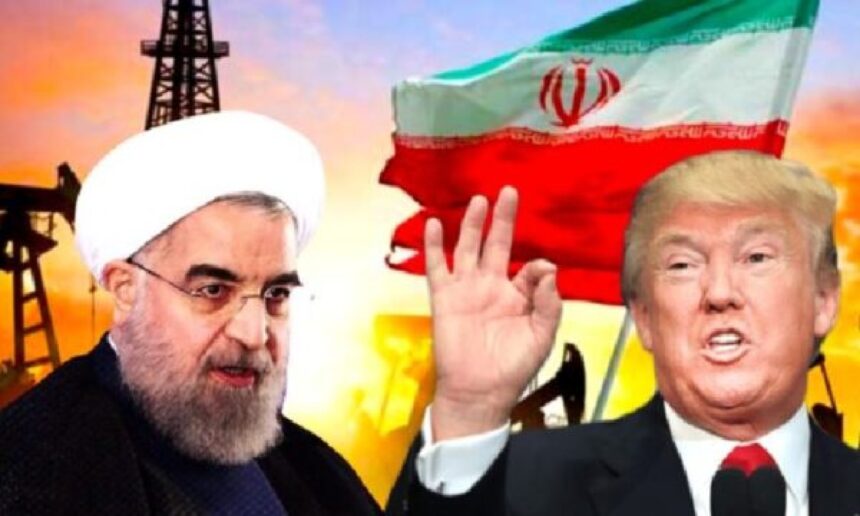
The administration of U.S. President Donald Trump said that the United States and Iran are closer than they have been in years to a nuclear agreement, but stressed that it is not yet final and that several key issues remain unresolved.
Speaking during a briefing with journalists, senior U.S. officials said negotiations with Iran are about “90–95%” complete and that the new agreement is expected to differ from the 2015 deal reached under President Barack Obama, from which Trump withdrew during his first term.
“It has not been fully negotiated yet. So don’t listen to the losers criticizing something they know nothing about,” Trump wrote on the Truth Social platform.
“Unlike those before me who should have solved this problem years ago, I don’t make bad deals,” he added.
Administration officials repeatedly emphasized that no immediate agreement is expected, despite significant progress in talks over the weekend.
“We are not there yet,” a senior official said on May 24. “We will not sign a deal today or tomorrow.”
The most significant progress in the negotiations appears to be related to Iran’s stockpiles of enriched uranium, which have long been a major sticking point.
According to a senior Trump administration official, Tehran has agreed “in principle” to give up its near-weapons-grade enriched uranium stockpile, although the details of implementation and verification are still being negotiated.
“The question is how this will be done,” the official said, rejecting claims that Iran has refused to hand over the material.
Iran currently possesses more than 440 kilograms of uranium enriched to 60%, according to the International Atomic Energy Agency (IAEA) — a level far beyond civilian use and only a technical step away from weapons-grade material.
Iranian sources suggest one possible solution could be dilution of the uranium under international supervision by the UN nuclear agency.
Another senior U.S. official said a framework is being discussed that would include a 60-day deadline to finalize a full agreement.
Trump administration officials argue that the new framework is based on strict conditions and strong enforcement mechanisms, unlike the 2015 nuclear deal (JCPOA).
They repeatedly use the phrase “no dust, no dollars” to describe the structure of the proposed agreement.
Under the framework, Iran would only receive gradual sanctions relief after meeting specific obligations, including eliminating enriched uranium stockpiles and halting interference with maritime traffic through the Strait of Hormuz.
“There will be no relief until Iran first fulfills its part of the deal,” an official said.
Officials also emphasized that the United States will not provide direct cash payments to Iran, a clear reference to long-standing Republican criticism of the Obama-era agreement.
“If they don’t fulfill their commitments, they get nothing. We have enforcement mechanisms in place,” another official said.
According to the U.S. administration, Iran has also agreed “in principle” that the Strait of Hormuz must remain open for commercial shipping without obstruction or fees, while Washington would ease its naval blockade measures in return.
However, officials stressed that military options remain on the table if diplomacy fails.
“We have alternatives. We could return to military strikes if no agreement is reached,” one official said.
The administration also framed the process not only as a nuclear negotiation but as part of a broader strategy to influence internal power dynamics in Iran.
“The main goal is to empower more moderate elements in Iran, in order to weaken the hardline faction,” an official said, adding that U.S. intelligence suggests moderates are gaining ground, although conservatives still retain significant control.
Officials did not clearly state whether military pressure or economic sanctions had a greater impact on Tehran’s shifting position, but acknowledged that Iranian negotiators are making concessions — particularly on uranium enrichment.
They also revealed that Trump has pressured regional leaders, including those from Saudi Arabia, Qatar, and Pakistan, to support a broader regional normalization process that includes Israel — a request that reportedly surprised some participants.
“There was silence on the line, and Trump joked asking if they were still there,” a U.S. official said.
The White House is currently trying to maintain cautious optimism.
Officials insist there is still much work to be done before a final agreement can be reached.
“There is no deal until there is a deal,” one official said.