The United States has announced that representatives of Ukraine and Russia will meet on November 10 and 11 in Abu Dhabi for a new round of talks aimed at ending the war in Ukraine.
Washington hopes that last week’s temporary ceasefire will pave the way for progress in the negotiations.
US Special Envoy Steve Witkoff said the United States would mediate the talks, which will focus on post-war security arrangements, reducing tensions, humanitarian assistance and the next steps towards peace.
According to a senior US official, Washington is expected to be represented by Witkoff and Jared Kushner, who are leading the American diplomatic efforts.
Russian President Vladimir Putin agreed to hold the talks in a trilateral format involving the United States, Ukraine and Russia following a meeting with Witkoff in St. Petersburg two weeks ago.
The renewed diplomatic initiative comes as US President Donald Trump seeks to make progress towards ending the deadliest war in Europe since the Second World War.
The last round of trilateral talks mediated by the United States took place in February.
The process was subsequently interrupted by the war involving the United States, Israel and Iran.
Hopes for the resumption of negotiations increased following a temporary ceasefire brokered by the United States last week.
The ceasefire enabled the delivery of humanitarian aid to the city of Oleshky in southern Ukraine, which is under Russian occupation.
Residents were also given the opportunity to leave the city if they wished.
However, despite diplomatic efforts, attacks between Russia and Ukraine have continued.
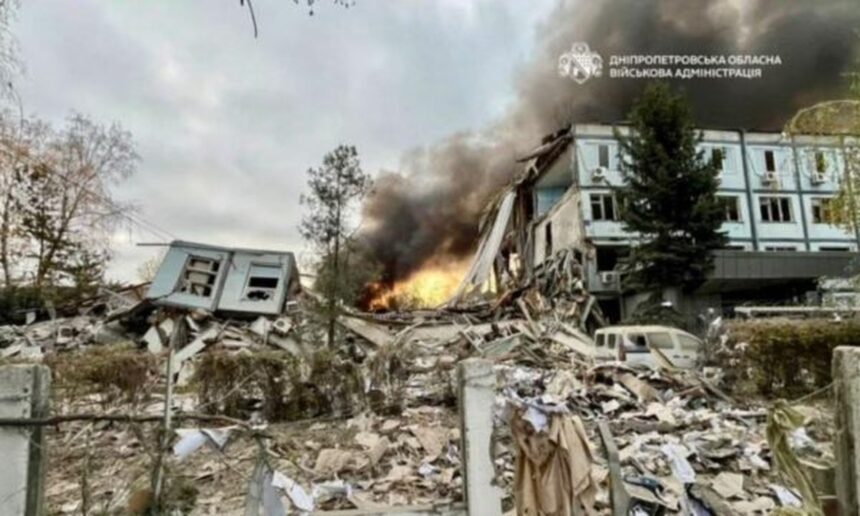
On November 3, Russian strikes wounded at least 62 people at a healthcare facility in Kharkiv and damaged energy infrastructure in other parts of Ukraine.
Meanwhile, Ukrainian officials said that drones had struck an oil refinery in the Russian city of Yaroslavl.
Analysts and former US officials interviewed by Radio Free Europe/Radio Liberty warn that there are few reasons to expect any major breakthrough in Abu Dhabi.
According to them, Moscow and Kyiv remain far apart in their positions, and there are still no clear signs that Putin is prepared to accept a ceasefire.
William Taylor, former US ambassador to Ukraine and later chargé d’affaires at the US Embassy during Trump’s first administration, said the central question was whether Russia had changed its position on a ceasefire.
“Has Putin decided to accept a ceasefire?” Taylor asked, recalling that both Washington and Kyiv have repeatedly expressed support for one.
He noted that Trump had previously proposed a ceasefire that would halt attacks on energy infrastructure.
Ukraine accepted the proposal, but Russia rejected it.
During previous trilateral talks held at expert level in January and February, negotiators made progress on several technical issues, including how compliance with a potential ceasefire could be monitored.
However, according to Taylor, they failed to reach an agreement on the ceasefire itself.
“The difficult part, and what would constitute real progress, would be for Putin to say yes, that he accepts a ceasefire,” Taylor told Radio Free Europe/Radio Liberty.
Ceasefire Remains the Main Obstacle
For Taylor, the success of the Abu Dhabi talks depends on one key issue: whether Russia agrees to stop the fighting.
Once that political decision is made, military and technical experts could then determine how a ceasefire would be monitored and implemented.
This could involve the use of aerial surveillance, drones and sensors, as well as establishing procedures for responding to potential violations.
However, Heather Conley, an expert at the American Enterprise Institute and a former senior US State Department official for European and Eurasian affairs, was more sceptical about the prospects for a major breakthrough.
“I don’t believe we should expect much from these technical meetings, other than the fact that talks are resuming,” Conley told Radio Free Europe/Radio Liberty.
“There will be no decisive breakthrough, but another meeting could potentially be scheduled,” she added.
According to Conley, further prisoner exchanges could be among the most realistic outcomes of the negotiations.
Alongside the talks in Abu Dhabi, US officials are also scheduled to meet European representatives in Brussels this week to discuss security guarantees for Ukraine, the future security architecture of Europe and financial support for Ukraine’s reconstruction.
According to a senior US official, representatives from France, Germany, the United Kingdom, the European Union and NATO will participate in the meetings.
The discussions are intended to continue the diplomatic efforts recently held in Kyiv, Oslo and St. Petersburg.