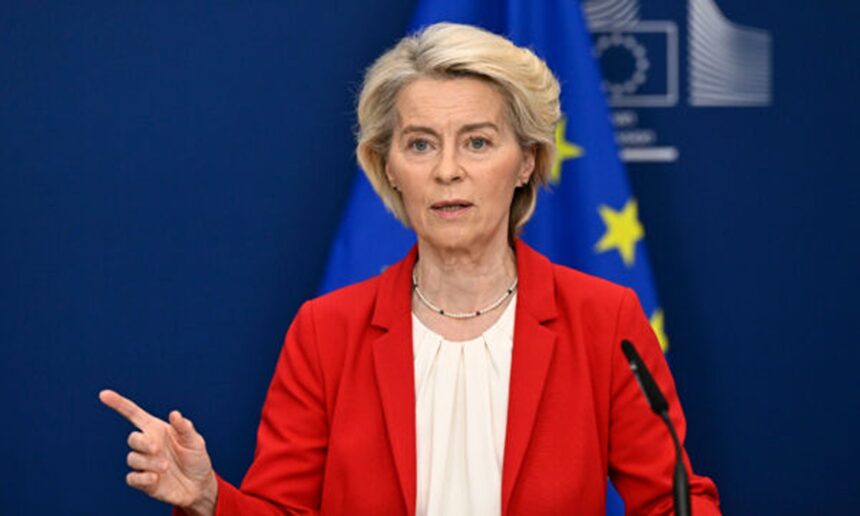
European Commission President Ursula von der Leyen has taken a new step to strengthen the institution’s security capabilities by creating an internal intelligence analysis structure within the European Commission.
The decision was approved during the final meeting of the College of Commissioners before the summer recess, with the new body scheduled to begin operations on September 1.
The new entity, known as the College of Security Secretariat, will operate within the European Commission’s Secretariat-General. According to the Commission, it will provide President von der Leyen and the College of Commissioners with rapid, integrated, and high-quality intelligence assessments on geopolitical developments and security challenges affecting the European Union.
The secretariat will monitor security developments, coordinate expert assessments, and prepare strategic intelligence briefings tailored to the Commission’s leadership. It will also cooperate with the European External Action Service’s (EEAS) Single Intelligence Analysis Capacity (SIAC), as well as with the competent authorities of EU member states.
However, the move has sparked criticism within EU institutions. Several EU officials and member-state diplomats argue that creating a new structure is unnecessary, noting that the College of Security has met only once during the first half of 2026.
The main concern centers on the handling of sensitive intelligence information. According to several European officials, member states have traditionally been reluctant to share classified intelligence, and concentrating such information within the European Commission could raise security and confidentiality risks.
A senior EU official stated that intelligence-sharing should remain under the responsibility of the Council of the European Union, arguing that “the Commission is not the appropriate place” to manage highly sensitive intelligence.
Von der Leyen’s initiative is expected to fuel further debate over the balance of powers among EU institutions and the best way to manage sensitive security information amid an increasingly challenging geopolitical environment.